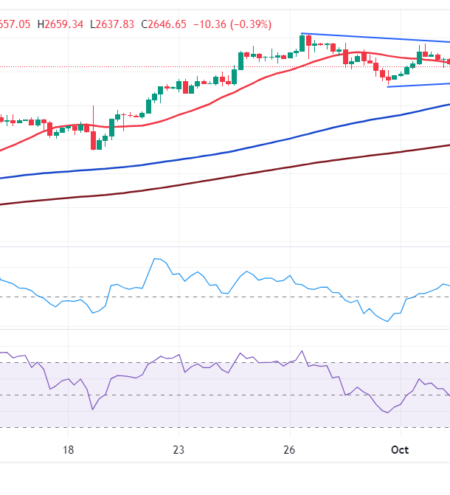
After an extraordinary run that carried gold to record territory earlier this year, the precious metal has spent recent months catching its breath. Prices have settled into a broad consolidation range around the US$4,000 mark, leaving investors questioning whether the bull market has run its course or is simply preparing for its next advance.
For many analysts, the answer remains the latter.
While short-term price action has disappointed those expecting an immediate continuation higher, several major investment banks continue to forecast substantially higher gold prices over the next 12 to 18 months.
Strong Headwinds in the Short Term
Gold has faced a difficult combination of rising Treasury yields, a stronger US dollar and changing expectations for US monetary policy.
Markets have become increasingly convinced that interest rates may remain elevated for longer than previously anticipated. Higher real yields reduce the appeal of non-yielding assets such as gold, while a stronger US dollar typically places additional pressure on precious metals priced in US currency.
These factors have combined to produce a significant correction from this year’s highs, despite ongoing geopolitical uncertainty.
Why Analysts Remain Positive
Although recent momentum has favoured sellers, many institutions believe the longer-term fundamentals supporting gold have not disappeared.
Among the more optimistic forecasts, Citi continues to project gold reaching around US$4,500 per ounce before eventually testing US$5,000 during 2027 under its central outlook.
The bank believes the recent weakness reflects changing market expectations rather than a deterioration in gold’s long-term investment case.
As inflation gradually moderates, real interest rates ease and the US dollar eventually loses momentum, gold could once again attract significant institutional buying.
Central Banks Continue to Accumulate
One factor providing ongoing support is demand from central banks.
Over the past several years, central banks—particularly those in emerging economies—have consistently added gold to their reserves as part of broader diversification strategies.
Rather than relying exclusively on US dollar assets, many nations continue increasing their exposure to physical bullion as a long-term store of value.
This structural demand has become one of the strongest pillars supporting the gold market.
Geopolitics Still Matters
Global political uncertainty remains another important influence.
Developments in the Middle East, particularly around energy supply routes, continue to affect investor sentiment.
Periods of escalating tension often encourage safe-haven buying, while signs of diplomatic progress can temporarily reduce demand for defensive assets.
These rapid swings have contributed to the increased volatility seen throughout 2026.
Several Possible Outcomes
Like most major investment banks, Citi assigns probabilities to multiple market scenarios rather than relying on a single forecast.
Its most likely outcome expects gold to remain volatile in the near term before gradually recovering as financial conditions become more supportive.
A more optimistic scenario would see faster declines in interest rates, a softer US dollar and easing geopolitical tensions combine to accelerate gold’s advance towards new all-time highs.
The less favourable outcome would involve persistent inflation, further monetary tightening and continued dollar strength, delaying any sustained recovery in bullion prices.
Investors Should Expect Volatility
The path higher is unlikely to be smooth.
Gold has historically experienced sizeable corrections even during powerful long-term bull markets.
Periods of consolidation often shake out short-term traders before stronger trends eventually resume.
For long-term investors, these corrections can be viewed as part of the normal market cycle rather than evidence that the broader trend has ended.
Physical Gold vs Market Noise
Daily headlines frequently move financial markets, but physical gold has historically been valued over decades rather than days.
Economic cycles, changing central bank policies, government debt levels, currency movements and geopolitical events all evolve over long periods.
For investors focused on preserving purchasing power rather than chasing short-term gains, these broader structural trends remain far more important than week-to-week price fluctuations.
Looking Ahead
While the next few months may continue to test investors’ patience, the broader outlook among many professional analysts remains constructive.
Higher interest rates and a resilient US dollar continue to present challenges, but ongoing central bank demand, elevated government debt, persistent geopolitical uncertainty and expectations that monetary policy will eventually become more accommodative all provide reasons for optimism.
Whether gold reaches US$5,000 during 2027 remains to be seen, but the consensus among many major financial institutions is that the long-term bull market may not yet have finished writing its story.
Disclaimer: This article is for general information only and should not be considered financial or investment advice. Precious metals prices can rise and fall, and past performance is not a reliable indicator of future results. Investors should conduct their own research and consider obtaining independent financial advice before making investment decisions.