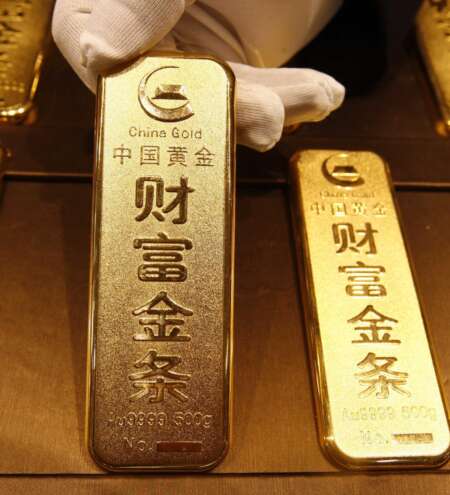
For thousands of years, gold has served one simple purpose: to preserve wealth when confidence in currencies, banks and financial systems comes under pressure.
Today, investors can gain exposure to gold in many different ways. They can buy shares in gold companies, exchange traded funds (ETFs), futures, certificates or other financial products linked to the gold price.
But there is an important distinction that is often overlooked:
Owning an interest in gold is not the same as owning gold.
If You Can’t Hold It, Do You Really Own It?
Physical gold is tangible wealth. A gold coin or bar is an asset that exists outside the banking system and does not depend on a broker, fund manager, exchange or financial institution to remain operational.
When you own physical bullion, you own the actual metal.
That distinction becomes particularly important during periods of financial stress.
Financial markets operate on trust. You trust the institution holding your assets. You trust the intermediary. You trust the settlement system. You trust that your claim can be converted into cash when you need it.
Physical gold removes much of that counterparty dependence.
A one ounce gold coin does not need a company to remain solvent for it to have value.
Gold Is Not Someone Else’s Promise
A bank deposit is a claim against a bank.
A bond is a claim against a borrower.
An ETF is a financial structure designed to provide exposure to an underlying asset.
Physical gold is different.
Gold is not a promise to pay. It is the asset itself.
This is one of the reasons central banks continue to hold gold as part of their reserves. Gold has no issuer, no CEO, no corporate balance sheet and no requirement for someone else to honour a debt.
Its value is recognised globally.
The Difference Between Price and Wealth
Gold is often discussed purely in terms of its price.
But for long-term holders, the more important question may be:
How much physical gold do you own?
If the price of gold rises because the purchasing power of currencies is falling, simply watching the dollar value of your gold can miss the bigger picture.
Gold can be viewed as a form of financial insurance. You are not necessarily buying it because you expect to become rich from a rising price. You are buying it because you want to preserve purchasing power and diversify away from assets that depend heavily on the financial system.
This is why physical bullion can have a place in a long-term wealth strategy.
ETFs and Physical Gold Are Not the Same
Gold ETFs can be useful financial instruments and may provide convenient exposure to movements in the gold price.
But an ETF unit is still a financial security.
You cannot normally take an ETF unit home, put it in your safe and hold it in your hand.
Physical bullion gives you direct ownership of the underlying metal.
That difference matters most when the reason for owning gold is not simply to speculate on its price, but to have an asset that exists independently of the financial system.
Gold Has No Counterparty
One of gold’s greatest strengths is also one of its simplest.
Gold does not owe you anything.
It is not dependent on interest payments. It does not require a company to generate profits. It does not need a government to maintain its value.
Gold has survived wars, banking crises, currency failures, inflationary periods and political upheaval because its value is not based solely on the promise of any single institution.
That does not mean gold’s price cannot fall. It certainly can.
But physical gold provides something different from a conventional financial asset: ownership of a scarce, globally recognised and tangible form of wealth.
Physical Gold Is About Control
The financial system is incredibly sophisticated, but sophistication can also create layers between you and what you believe you own.
Physical bullion puts the asset back into your hands.
You know what you own.
You know where it is.
You can verify it.
And, provided it is securely stored, insured and properly documented, it can remain outside the day-to-day movements of financial markets.
For investors concerned about excessive debt, currency debasement, geopolitical instability or financial-system risk, that independence can be extremely valuable.
The Question Every Gold Investor Should Ask
Instead of asking only:
“What will gold be worth next year?”
Perhaps the more important question is:
“How much physical gold should I own?”
Nobody knows exactly where the gold price will be tomorrow, next month or next year.
But history demonstrates that currencies change, governments change, financial institutions fail and economic conditions change.
Gold has endured through all of them.
That is why physical gold should not simply be viewed as another trade.
It is a form of wealth you can actually own.
And when financial markets become uncertain, there is a profound difference between having a claim on an asset and actually possessing the asset itself.
If you can’t hold it, you don’t own it.
For those who want to build long-term financial resilience, physical gold can provide something increasingly difficult to find in the modern financial system: direct ownership, independence and a tangible store of wealth.
Disclaimer: This article is provided for general information and educational purposes only and does not constitute financial, investment, legal or taxation advice. Gold and other precious metals can fluctuate in value, and past performance is not a guarantee of future results. Physical bullion involves premiums, storage, insurance and other costs, and investors should consider their individual circumstances and objectives before making any purchase. You should seek independent professional advice before making financial decisions.