Gold Rebounds From $4,070, But the Bigger Gold Story Is Physical Demand
Gold has bounced from around US$4,070 an ounce, but the latest price movement tells only part of the story.
Spot gold was trading around US$4,127 on 8 October after falling to a two month low the previous day. Higher US Treasury yields and a stronger US dollar have created short term pressure, while uncertainty surrounding the Federal Reserve’s next moves continues to drive volatility.
But beneath the daily price movements, something much more important is happening.
Investors, institutions and central banks continue to accumulate gold.
And that is why we believe the bigger story is not simply where the gold price goes next week.
It is how much physical gold you own.
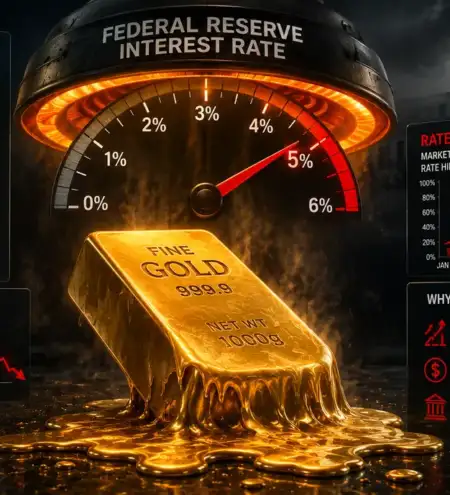
The Fed Is Creating Short Term Headwinds
The Federal Reserve remains one of the biggest influences on the gold price.
Markets are currently pricing in a relatively low probability of an October rate increase, while expectations for another increase in December remain elevated. At the same time, US Treasury yields have moved sharply higher, increasing the opportunity cost of holding a non interest bearing asset such as gold.
This can create significant short term movements in the gold price.
But gold has never depended on one interest rate decision to justify its existence.
Gold’s role is much bigger.
It is a tangible asset that exists outside the balance sheet of a bank, company or government.
The Demand for Gold Has Not Disappeared
One of the most important developments is the continued demand from investors.
According to the World Gold Council, global physically backed gold ETFs attracted approximately US$10 billion in September, while global holdings increased by 67 tonnes to a record 4,256 tonnes.
That is significant.
It means that even while the gold price was experiencing pressure, investors were still adding exposure.
But there is another buyer whose behaviour deserves even more attention.
Central banks.
China Continues to Buy Gold
China’s central bank added another 740,000 fine troy ounces of gold during September, taking its reported holdings to approximately 77.47 million ounces.
It was the 23rd consecutive month in which the People’s Bank of China increased its gold reserves.
Other reporting put the September increase at approximately 21 tonnes, the largest monthly increase in China’s official gold reserves in three years.
Ask yourself a simple question:
Why are some of the world’s largest financial institutions continuing to increase their physical gold holdings?
Central banks are not buying gold because they believe they can predict next week’s price.
They are buying it because gold provides something that currencies, government bonds and financial assets cannot provide in exactly the same way.
It has no issuer.
Gold Is Not a Piece of Paper
This is where the distinction between owning gold and having exposure to the gold price becomes extremely important.
There are many ways to gain financial exposure to gold.
You can own shares in a gold mining company.
You can own a gold ETF.
You can trade futures or derivatives.
You can speculate on the gold price.
But none of these is the same as owning physical bullion.
When you own physical gold, you own the metal itself.
You are not relying solely on the performance of a company, a fund manager, a derivative contract or another financial institution.
At FirstGold, our philosophy is simple:
Gold was not created as a financial product. Gold has been money and a store of value for thousands of years.
That distinction matters.
If You Can’t Hold It, Do You Really Own It?
There is an enormous difference between owning physical bullion and owning a financial claim linked to the price of gold.
With physical bullion, the asset exists.
It can be stored.
It can be transferred.
It can be passed to another generation.
It does not require a company to continue operating in order for the underlying metal to exist.
That is why we believe:
If you don’t own physical bullion, you don’t own the metal. You own financial exposure to it. And there is a very big difference.
Don’t Try to Predict the Perfect Gold Price
Nobody knows exactly where gold will trade tomorrow.
It could rise.
It could fall.
It could move sideways for months.
Trying to pick the perfect entry point can become a never ending exercise.
For long term physical bullion holders, a different approach can make more sense.
Cost averaging.
Instead of waiting for the perfect price, you gradually build your physical gold and silver holdings over time.
A little this month.
A little next month.
And another purchase when circumstances allow.
Over time, the objective is not to own the perfect purchase.
The objective is to build a meaningful physical position.
At FirstGold, you can start from small amounts and build your holdings progressively.
No amount is too small.
You can build wealth one gram at a time.
The Price Will Always Be the Price
There will always be reasons to wait.
Gold is too expensive.
Gold has gone up too quickly.
Interest rates are too high.
The dollar is too strong.
Gold might fall another 10%.
Then, when gold rises again, the reason becomes:
“I should have bought earlier.”
This is the problem with trying to time the market.
The better question may be:
How much physical gold do I actually want to own?
That is a very different question.
Gold Is Not Bought to Get Rich
At FirstGold, we have never believed gold should be promoted as a get rich quick asset.
Gold and silver are not bought because they are guaranteed to rise tomorrow.
They are bought because they can provide a form of wealth outside the conventional financial system.
They can help diversify wealth.
They can provide a store of value.
And, for many people, they provide something increasingly difficult to find in modern finance:
ownership of a tangible asset.
The Bigger Story Is Physical Demand
The current gold market demonstrates why looking only at the daily price can be misleading.
Yes, higher yields and a stronger US dollar are creating short term pressure.
Yes, the Federal Reserve remains a major influence.
Yes, gold can fall.
But at the same time:
- Global gold ETF holdings have reached record levels.
- September saw approximately US$10 billion of global gold ETF inflows.
- Global ETF holdings increased by 67 tonnes.
- China’s central bank has continued buying gold for 23 consecutive months.
- China’s September purchase was approximately 21 tonnes.
- Governments and central banks continue to hold gold as a strategic reserve asset.
These are not short term trading signals.
They are evidence of continuing demand for gold as an asset.
The FirstGold Approach
FirstGold is built around a simple principle:
Own the physical metal.
Not a promise.
Not a prediction.
Not a paper substitute.
Physical gold and silver.
Our platform allows customers to build their holdings progressively, monitor their metal and ultimately redeem their bullion.
Because at the end of the day, there is something reassuring about knowing exactly what you own.
A financial statement can show a number.
A screen can show a price.
But physical bullion is tangible.
You can hold it.
And that is the point.
Gold Is Not Bought to Get Rich — It Is Bought to Stay Wealthy
The gold price will continue to move.
There will be corrections.
There will be rallies.
There will be headlines predicting the next great crash or the next great surge.
But the fundamental question remains remarkably simple:
How much physical gold and silver do you own?
Don’t worry only about the price of gold.
Worry about whether you own enough physical.
Build wealth one gram at a time.
Explore FirstGold and physical bullion
Disclaimer: This article is for general information only and is not financial advice. Precious metals prices can rise and fall, and investors should consider their own circumstances before making any purchase.