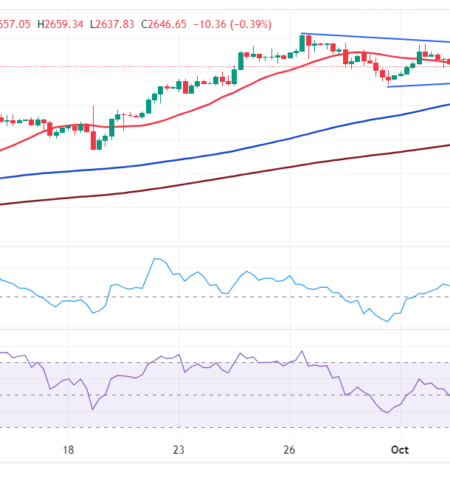
While gold prices experienced a significant correction in October, China’s appetite for physical gold remained remarkably strong. The latest World Gold Council report reveals an important development: investment demand is increasingly replacing jewellery consumption as the driving force behind China’s gold market.
Perhaps the most significant figure is the activity of China’s central bank. The People’s Bank of China (PBoC) added 26 tonnes of gold in October, its largest monthly purchase in three years and its 24th consecutive month of buying.
This is an important reminder that short-term price movements do not necessarily reflect the long-term decisions being made by some of the world’s largest gold holders.
China’s Gold Buying Tells a Bigger Story
According to the World Gold Council’s latest China Gold Market Update, several important trends emerged during October:
1. China’s central bank accelerates gold purchases
The People’s Bank of China purchased 26 tonnes of gold during October, bringing its reported gold reserves to 2,435 tonnes.
This was the largest monthly addition in three years and marked the 24th consecutive month of reported gold accumulation.
Despite falling prices, China’s central bank continued increasing its physical gold holdings. Gold now represents approximately 8.1% of China’s foreign exchange reserves.
The message is significant: while short term market participants react to price movements, China’s central bank continues to build its strategic gold reserves.
2. Chinese investors continue accumulating gold
Chinese gold exchange traded funds recorded their fourth consecutive month of inflows in October, adding another 6.3 tonnes.
Total ETF holdings reached a record 310 tonnes at the end of October, with 62 tonnes added during 2026 so far.
Although some outflows appeared in early November as prices weakened and equity markets stabilised, the longer term accumulation trend remains notable.
3. Physical gold demand remains resilient
One of the most interesting findings is the continued strength of physical gold demand.
Gold withdrawals from the Shanghai Gold Exchange increased to 94 tonnes in October, despite the usual seasonal slowdown.
Lower prices encouraged investors to buy bullion, while jewellers also took advantage of the price correction to replenish stocks.
Importantly, the World Gold Council identifies a structural change in the Chinese market. Investment demand for gold bars and coins is increasingly replacing jewellery consumption as the primary driver of physical gold demand.
This is a significant development for the global gold market.
4. Gold imports continue increasing
Chinese gold imports reached 129 tonnes in September, an increase of 41% compared with the same month last year.
This reinforces the importance of China’s physical gold market and demonstrates that demand for the metal remains substantial.
5. Paper market activity slows
Trading activity in China’s Shanghai Futures Exchange gold market declined during October.
Average daily futures trading volumes fell 28% to 258 tonnes per day.
This suggests that speculative trading activity cooled alongside the gold price correction.
However, reduced futures activity should not be confused with a disappearance of physical demand. The continued central bank purchases, ETF accumulation and physical bullion withdrawals tell a different story.
What does this mean for gold investors?
The latest Chinese figures highlight an important distinction between short term market sentiment and longer term physical gold accumulation.
Gold experienced a significant correction during October, with the international US dollar gold price falling 6.3%. Yet China’s central bank increased its purchases, ETF holdings reached a record, and physical bullion demand remained resilient.
This is particularly interesting at a time when central banks around the world continue to reassess their reserve holdings and the role of gold in protecting national wealth.
For physical gold owners, the important question is not simply where the gold price trades this week or next month. It is whether the fundamental reasons for holding gold remain intact.
Government debt, currency depreciation, inflation risks and geopolitical uncertainty have not disappeared because gold has experienced a correction.
The World Gold Council’s findings provide further evidence that physical gold remains an important component of China’s long term wealth preservation strategy.
The big players are continuing to accumulate. Investors should pay attention to what they are buying, not just what the market is selling.
The FirstGold Perspective
At FirstGold, we believe physical ownership and a disciplined accumulation strategy deserve serious consideration.
Price corrections are never comfortable, particularly for investors who have watched gold reach new highs. However, they can also provide opportunities for those building long term physical holdings.
Dollar cost averaging allows buyers to accumulate gold and silver progressively rather than attempting to predict the market’s next move. By purchasing regularly, investors can spread their entry prices across different market conditions.
You do not need to buy an entire ounce at a time. You can build your physical precious metals holdings gradually, one gram at a time.
Do not lose sight of the bigger picture. Central banks are buying, physical demand remains substantial, and gold continues to play an important role in protecting wealth.
At FirstGold, we make accumulating physical gold, silver and platinum straightforward.
Build wealth one gram at a time.
Visit FirstGold and discover how you can start accumulating physical precious metals.
Original research
This article is based on the World Gold Council’s November 2026 China Gold Market Update.
Read the full World Gold Council report – China Gold Market Update: Robust Demand in October
Download the original PDF report