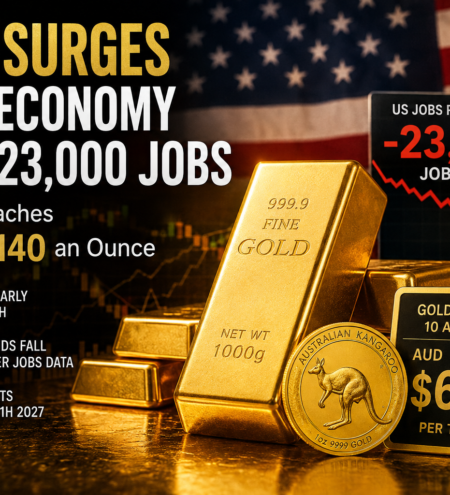
Gold and silver prices came under renewed pressure on Thursday as escalating tensions in the Middle East pushed crude oil prices closer to $100 a barrel, reviving concerns that inflationary pressures could delay interest rate cuts and potentially force the US Federal Reserve to maintain a more aggressive policy stance.
After a two-day rebound that lifted gold to a two-week high, investors moved to lock in profits as rising energy prices and higher Treasury yields created a challenging environment for non-yielding assets.
Gold Pulls Back After Recent Recovery
Comex gold futures for August delivery fell as much as 2.6%, touching US$4,042.50 per ounce, before recovering slightly to trade around US$4,050.80, down approximately 2.4% during Thursday’s session.
The decline followed Wednesday’s rally, which saw gold climb to a two-week high of US$4,165.87, as investors initially returned to precious metals following recent weakness.
However, the latest move highlights the ongoing battle between safe-haven demand and the impact of higher interest rate expectations.
Gold remains caught between two major technical levels:
- Support: around US$4,000 per ounce
- Resistance: near US$4,200 per ounce
Analysts suggest that until gold breaks decisively above resistance or falls below key support, the market is likely to remain volatile and range-bound.
Silver Takes a Bigger Hit
Silver experienced a sharper sell-off, with September futures dropping as much as 4.9% to US$57.32 per ounce before trimming losses to trade around US$57.82, down approximately 4.1%.
Unlike gold, silver carries both monetary and industrial demand drivers, making it more sensitive to concerns about economic growth, manufacturing activity, and investor sentiment.
Silver remains well below its January record high of US$85.73 per ounce, with traders closely watching whether current levels attract renewed physical demand.
Oil Surge Raises Inflation Concerns
The latest pressure on precious metals came after a fresh escalation in Middle East tensions.
Iran-backed Houthi forces reportedly targeted two Saudi oil tankers in the Red Sea, while military exchanges between the United States and Iran continued.
The developments pushed oil prices more than 5% higher, moving closer to the psychologically important US$100 per barrel level.
Higher energy prices are raising concerns that inflation could remain elevated, increasing the likelihood that the Federal Reserve keeps interest rates higher for longer.
Rising bond yields also weighed on gold, with two-year US Treasury yields continuing their upward move. Since gold does not pay interest, higher yields typically increase the opportunity cost of holding precious metals.
Gold’s Recent Bounce Was Driven by Short-Term Buying
According to market analysts, the recent recovery in gold was largely driven by technical buying rather than a major shift in investor positioning.
Bart Melek, Global Head of Commodity Strategy at TD Securities, said the rebound was fuelled by short covering and dip buying after technical support levels held during the previous sell-off.
With interest rates moving higher, Melek suggested gold could potentially retest support around US$3,900 per ounce, while resistance remains near US$4,200.
Technical Signals Add Pressure
Gold has also faced increased attention from technical traders after the 50-day moving average crossed below the 200-day moving average, creating what is known as a “death cross” indicator.
While technical signals do not guarantee future price movements, the pattern is often viewed by traders as a warning sign of weakening momentum.
The precious metals market has now spent several weeks consolidating within a broad US$200 trading range, leaving short-term traders focused on volatility while longer-term investors assess the bigger macroeconomic picture.
Mining Stocks Follow Precious Metals Lower
Precious metal mining shares also moved lower as investors reacted to the decline in bullion prices.
Major producers including Newmont, Agnico Eagle, Barrick, Kinross, AngloGold Ashanti and Gold Fields all recorded losses, while silver-focused miners experienced additional pressure.
The decline highlights how closely mining equities remain tied to movements in the underlying metals market.
The Bigger Picture for Gold Investors
Despite the short-term volatility, gold continues to be supported by several long-term factors, including central bank demand, geopolitical uncertainty, concerns surrounding government debt levels, and ongoing questions surrounding global monetary policy.
The current market remains a tug-of-war between two powerful forces:
- Higher interest rates and stronger yields creating short-term pressure
- Safe-haven demand and long-term economic uncertainty supporting gold
For physical gold investors, periods of volatility have historically created opportunities for those focused on long-term wealth preservation rather than short-term price movements.
FirstGold will continue monitoring global precious metals markets as gold trades within the key US$4,000–US$4,200 range and investors assess the next move in interest rates, inflation and geopolitical risks.
Disclaimer: This article is for informational purposes only and does not constitute financial advice. Precious metals prices can be volatile, and investors should consider their own financial circumstances and seek professional advice before making investment decisions.