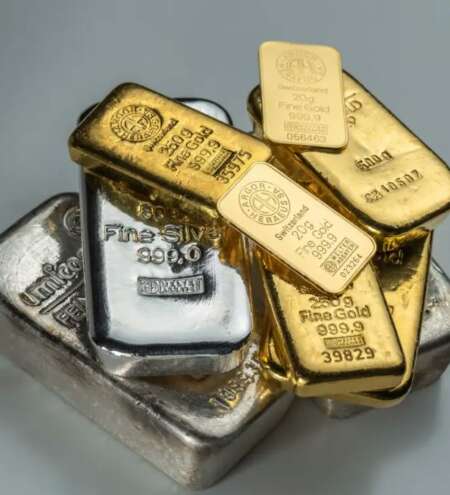
Precious metals showed renewed strength at the end of last week, with silver recovering towards US$66 an ounce and gold climbing back towards US$4,380. However, higher interest rates, a stronger US dollar and elevated Treasury yields continue to create a challenging short-term environment for precious metals.
Silver Holds Above Key Support
Silver ended the week near US$66, after rebounding on Friday. While the short-term outlook remains uncertain, the longer-term price structure continues to show strength provided key support levels hold.
Expectations of further Federal Reserve tightening, a US Dollar Index above 100 and the 10-year US Treasury yield approaching 5% could limit silver’s immediate upside.
The key technical levels remain:
- US$72: A break above this level could open the way towards US$90.
- US$60: A move below this level could bring US$55 back into focus.
- US$50–US$55: This remains an important longer-term support zone.
For physical silver holders, these short-term movements sit within a much broader market that continues to be influenced by industrial demand, supply constraints and investor demand.
Gold Recovers Towards US$4,380
Gold also recovered last week, ending Friday near US$4,380 an ounce. The move came despite the Federal Reserve raising its benchmark interest rate by 0.25 percentage points to a range of 3.75%–4.00%.
According to UniCredit, gold could trade between approximately US$4,300 and US$5,000 by the end of 2026.
Gold gained around 0.75% over the week, although it remained approximately 2.92% lower over the previous month, highlighting the volatility that has followed the market’s retreat from its September lows.
UniCredit maintains a neutral to slightly constructive outlook, with higher interest rates expected to restrain some investment demand while continued purchases by central banks and investors provide support.
Why Rising Yields Matter
Gold does not pay interest. As bond yields rise, investors can earn more income from interest-bearing assets, increasing the opportunity cost of holding gold.
The US 10-year Treasury yield approaching 5% therefore remains an important factor for the precious metals market.
However, the reason behind rising yields is also significant.
UniCredit notes that higher yields caused by stronger economic growth and expectations of higher long-term interest rates would generally be negative for gold.
Yields driven by larger fiscal deficits, concerns about government debt sustainability and higher term premiums can have a different effect. If these concerns weaken confidence in the US dollar or government finances, they may provide additional support for gold.
This creates an important balance for investors to watch: higher interest rates can pressure gold, while concerns surrounding government debt and currencies can increase demand for gold as a store of value.
Gold’s Bigger Picture
Despite the recent pullback, gold remains higher than it was at the beginning of 2026. The market has also demonstrated how quickly sentiment can change when expectations surrounding interest rates, inflation, currencies and central-bank demand shift.
Gold previously reached a January peak near US$5,594, meaning even the upper end of UniCredit’s current end-2026 forecast would remain below that level.
For physical bullion holders, the longer-term story is therefore not simply about predicting the next price movement. Gold and silver continue to be viewed by investors as tangible assets that can provide diversification outside traditional financial markets.
At FirstGold, we believe understanding both the short-term price movements and the longer-term fundamentals is important when building a physical precious metals holding.
Gold and silver are not bought to get rich. They are bought to help stay wealthy.
Market commentary is provided for information purposes only and is not financial advice. Precious metals prices can rise and fall, and past performance is not indicative of future results.