
For over 5,000 years, the gold–silver ratio has quietly tracked monetary history, reflecting how societies value scarcity, confidence, and risk.
From ancient Egypt to Rome, medieval Europe, and early modern economies, gold and silver rarely drifted far from a steady relationship. Pharaohs exchanged gold for silver at ratios as low as 1:2, while Rome standardised it at 1:15. Even through wars, plagues, and regime changes, the balance remained remarkably stable.
That stability has shifted in recent years. By August 2025, the ratio hit around 1:88 — the most extreme level in recorded history — signalling a striking imbalance between gold, the haven of safety, and silver, a barometer of economic growth.
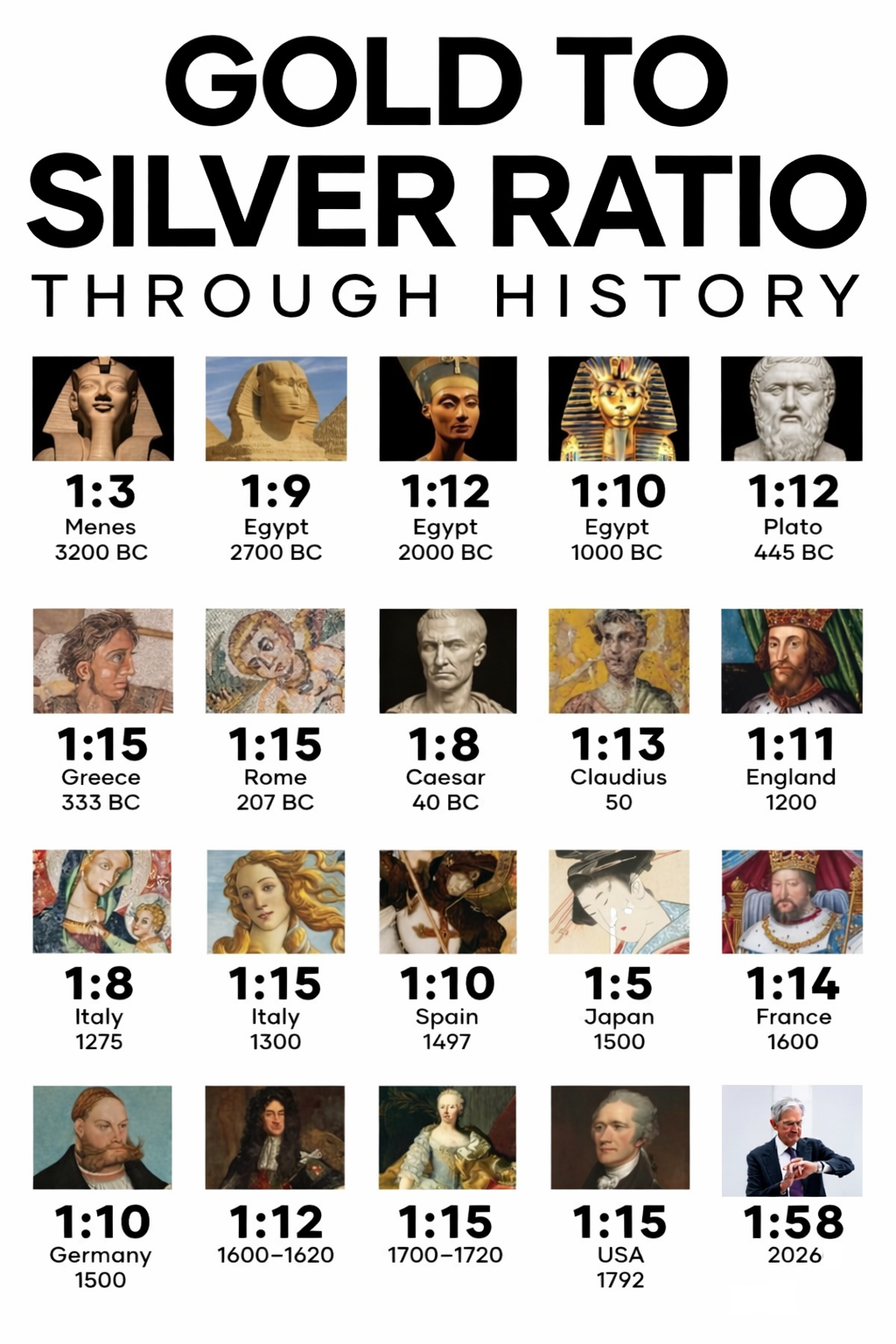
Since then, the ratio has begun to move back in silver’s favour, narrowing to about 1:57.
Why does this matter?
Historically, extreme spikes in the gold–silver ratio align with periods of financial stress, deflationary pressure, or heightened demand for liquidity. Silver, with its dual industrial and monetary role, tends to lag when growth expectations falter. Gold, in contrast, benefits from fear, uncertainty, and the desire to preserve capital.
The recent shift hints at a subtle but important change: markets may be starting to price in just how much pessimism is already reflected in cyclical assets.
This doesn’t mean gold is headed lower, nor that silver will surge immediately. But history shows that such extreme divergences rarely last forever. When balance returns, it typically unfolds over several years, through rising silver, falling gold, or a mix of both.
For savvy investors, the gold–silver ratio is more than a number. It’s a gauge of sentiment — and at times, a contrarian signal waiting to be noticed.