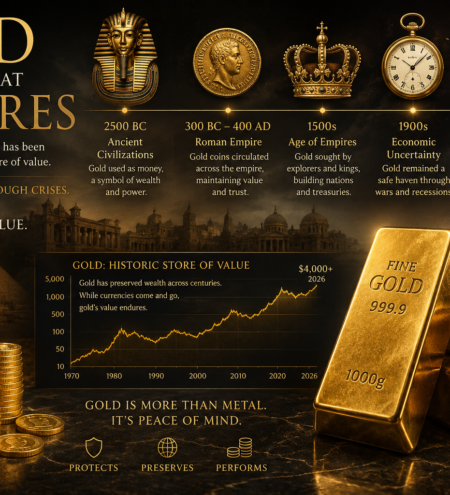
Gold prices pushed back above the $5,000 per ounce level, demonstrating the metal’s resilience despite ongoing uncertainty surrounding interest rate policy and global economic conditions. After opening the trading session lower, bullion recovered during Monday’s session as investors reassessed inflation risks and the outlook for monetary policy.
Gold futures slipped modestly, with contracts trading around $5,035 per troy ounce, while spot gold rebounded to approximately $5,019, restoring the psychologically important $5,000 level that has become a key benchmark for the precious metals market.
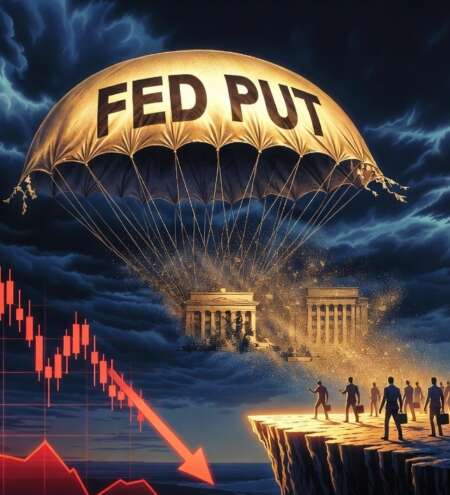
The recent volatility in gold markets has been closely linked to rising energy prices and uncertainty around interest rate cuts by the Federal Reserve. Higher crude oil prices feed directly into inflation by increasing transportation, manufacturing, and production costs across the global economy. While gold is traditionally viewed as a hedge against inflation, higher interest rates tend to strengthen yield-bearing assets such as bonds, temporarily reducing the appeal of non-yielding assets like bullion.
Market analysts believe gold may remain volatile in the short term as traders adjust their expectations regarding monetary policy. Christopher Wong, strategist at OCBC Bank, noted that gold could see choppy price action as investors reassess the likely path of interest rates and real yields in the months ahead.
The Federal Reserve is widely expected to hold interest rates within the 3.5%–3.75% range at its upcoming policy meeting, marking the second consecutive pause in the tightening cycle. However, with energy prices pushing inflation pressures higher again, markets are increasingly uncertain about when rate cuts may eventually arrive.
Geopolitical Tensions and Gold’s Safe-Haven Role
Beyond interest rate expectations, geopolitical tensions—particularly in the Middle East—continue to influence investor behaviour. Historically, gold has served as a safe-haven asset during periods of political and economic uncertainty, and the current environment is reinforcing that long-standing pattern.
Modern precious metals markets operate within a highly interconnected financial ecosystem. Regional conflicts can quickly trigger global responses as institutional investors reposition portfolios to protect capital. When geopolitical risk rises, major financial institutions—including pension funds, sovereign wealth funds, and insurance companies—often shift allocations toward assets perceived as stable stores of value.
This “flight to quality” effect can rapidly push gold prices higher. Portfolio managers rebalance toward physical assets and precious metals, creating immediate demand pressure that can overwhelm traditional price discovery mechanisms in commodity markets.
Supply Chain and Market Structure Pressures
Gold’s current price behaviour also highlights the complex relationship between supply chain disruptions, institutional capital flows, and market psychology. Even when physical supply is not severely disrupted, uncertainty surrounding logistics, trade routes, or regional stability can create price volatility that exceeds the actual impact on global gold production.
In today’s markets—where trading hubs are concentrated and logistics operate on just-in-time systems—any perceived disruption can quickly ripple across global commodity exchanges. Algorithmic trading systems, hedge funds, and central banks all react differently to these signals, often amplifying price movements.
Structural Changes in the Gold Market
While gold has historically surged during global crises, analysts note that the speed and scale of recent price movements suggest deeper structural changes in the market. Central bank buying, institutional hedging strategies, and growing demand for physical bullion are increasingly influencing long-term price trends.
For investors, this environment reinforces the importance of physical gold ownership and disciplined purchasing strategies.
FirstGold Strategy: Cost Averaging in Physical Bullion
At FirstGold, market volatility is viewed not as a risk but as an opportunity. One of the most effective strategies during fluctuating markets is cost averaging, where investors purchase physical bullion regularly over time rather than attempting to time short-term price swings.
By consistently accumulating gold and silver regardless of daily price fluctuations, investors smooth out volatility and build long-term purchasing power. This approach has proven particularly effective during periods of market uncertainty, where short-term corrections often precede new price highs.
With gold maintaining strong support above the $5,000 level, many analysts believe the long-term trajectory for precious metals remains positive—driven by geopolitical tensions, inflation concerns, and continued global demand for safe-haven assets.
For investors seeking stability in an increasingly uncertain financial environment, physical gold and silver remain among the most trusted stores of value in the global economy.