
Skip to content Skip to footer

History Repeats: Why Physical Gold Still Matters in Your Own Hands

More than a century ago, in 1912, J. P. Morgan delivered a statement that continues to echo through financial markets today: “Gold is money. Everything else is credit.”

At the time, the world was still anchored to the discipline of the gold standard. Currency was not created at will it was backed by something tangible, scarce, and universally recognised. Fast forward to today, and the global financial system looks very different. Yet, in times of uncertainty, investors continue to rediscover the same truth Morgan understood over a century ago.

The Illusion of Modern Money

Today’s financial system is built almost entirely on credit. Fiat currencies, digital balances, and complex financial instruments dominate global trade. Central banks, including the Federal Reserve, have the ability to expand the money supply rapidly, particularly during periods of crisis.

While this flexibility can stabilise economies in the short term, it comes at a cost currency debasement, inflation, and growing systemic risk.

Unlike paper money or digital assets, physical gold carries no counterparty risk. It does not rely on a bank, a government, or a financial institution to maintain its value. It simply exists — and that is precisely its strength.

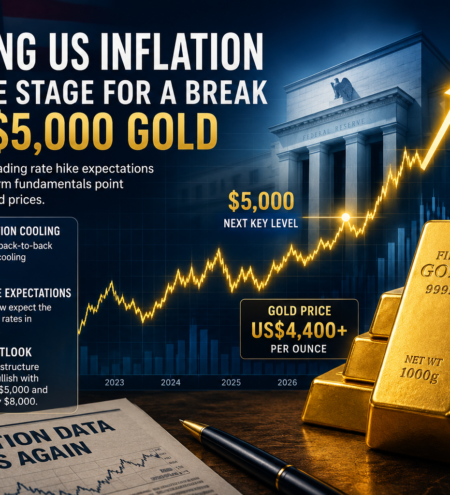
Why Physical Gold Matters More Than Ever

There is a critical distinction that many investors overlook: owning gold is not the same as holding gold.

Exchange-traded funds, paper gold, and unallocated accounts may offer exposure to price movements, but they still exist within the financial system Morgan warned about a system built on credit.

Physical gold bullion, held in your own hands or under direct control, removes that risk entirely.

In times of financial stress, history shows a clear pattern:

  • Banks can fail
  • Markets can freeze
  • Access to funds can be restricted

But physical gold remains liquid, portable, and universally accepted.

Lessons From History

From the collapse of banking systems during the Great Depression to more recent financial crises, gold has consistently acted as a store of value when confidence in financial institutions falters.

Even central banks themselves continue to accumulate gold reserves a signal that, despite the evolution of modern finance, gold still sits at the foundation of trust in the global system.

This is not theory. It is behaviour.

The Shift Back to Tangible Wealth

As inflation pressures persist, geopolitical tensions rise, and debt levels expand globally, a growing number of investors are moving away from purely paper-based assets and back toward tangible stores of wealth.

Gold is once again being recognised not just as a commodity, but as real money.

And the key lesson is simple:
If you do not hold it, you do not truly own it.

FirstGold Take

J.P. Morgan’s words were not just relevant in 1912 they are arguably more relevant today than ever before.

In a world increasingly built on promises, leverage, and digital abstractions, physical gold stands apart. It requires no trust, no intermediary, and no explanation.

History does not repeat itself exactly but it often rhymes.
And when it comes to wealth preservation, the message remains unchanged:

Gold is money. Everything else is credit.