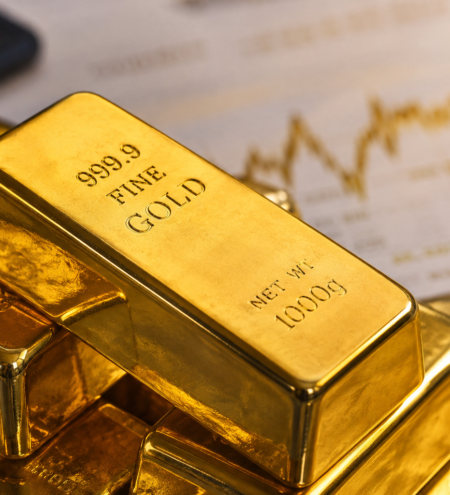
The sharp and persistent rise in gold prices over recent years has done more than reinforce its status as the ultimate store of value.
It has also subtly reshaped investor behaviour across the precious metals market, particularly in silver.
To understand this dynamic, it is useful to borrow a concept from economics that is rarely applied in commodity markets at scale: The Giffen good.
While gold is not a true Giffen good in the strict academic sense, the behavioural parallels in times of rapid price appreciation provide a powerful lens through which to understand why silver often becomes more attractive when gold becomes expensive.
What is a Giffen Good?
A Giffen good is an economic paradox: a product for which demand increases as its price rises, typically because it is an essential, low-cost staple with no close substitutes.
As the price rises, the income effect (reduced purchasing power) outweighs the substitution effect, forcing consumers to buy more of the cheaper staple instead of more desirable alternatives.
Classic examples are theoretical or context-specific, such as staple foods in impoverished conditions.
The key idea is not luxury demand, but constrained choice under pressure.
However, the underlying behavioural principle forced substitution when prices distort affordability is highly relevant to precious metals markets.
Gold as a “Pressure Anchor” Asset
Gold occupies a unique position in global finance. It is simultaneously:
- A monetary hedge against inflation
- A geopolitical risk asset
- A store of value during currency debasement
- A liquidity reserve for institutions and central banks
As gold prices rise significantly, it does not reduce demand in the conventional sense. Instead, it reinforces its perceived necessity in portfolios.
This creates a quasi-“sticky demand” effect: investors feel compelled to maintain exposure regardless of price.
In behavioural terms, gold becomes less of a discretionary purchase and more of a must-have allocation, particularly for wealth preservation strategies.
This is where the Giffen-like analogy begins to emerge not because gold behaves as a textbook Giffen good, but because rising prices do not meaningfully suppress demand among core buyers.
The Substitution Effect: Why Silver Benefits
As gold moves into higher price territory, a clear behavioural shift often occurs in both retail and institutional markets: capital begins to look for functionally similar but more affordable alternatives.
This is where silver enters the equation.
Silver shares several important characteristics with gold:
- It is a precious metal with monetary history
- It is widely used as an inflation hedge
- It is liquid and globally traded
- It has both investment and industrial demand
However, silver trades at a fraction of gold’s price. This creates a natural substitution pathway when gold becomes psychologically or financially “expensive” for incremental allocation.
In this sense, silver functions as the adaptive substitute asset in the precious metals hierarchy.
The Gold–Silver Ratio as a Behavioural Signal
One of the most widely observed indicators in precious metals markets is the gold–silver ratio (the number of ounces of silver needed to buy one ounce of gold).
Historically:
- High ratios often signal undervaluation of silver
- Low ratios tend to indicate silver outperformance cycles
When gold prices rise sharply, the ratio often expands, making silver appear relatively cheap. This encourages a reallocation effect:
- Investors reduce marginal gold purchases
- Capital flows into silver as a “catch-up” trade
- Speculative interest in silver increases due to perceived undervaluation
This is not Giffen behaviour in the strict sense, but it mirrors the same substitution under price pressure mechanism.
Income Effect in Precious Metals Allocation
Another useful adaptation of the Giffen framework is the concept of the portfolio income effect.
As gold prices rise, investors holding gold experience an increase in perceived wealth. This creates two simultaneous forces:
- Rebalancing pressure – portfolios become overweight in gold
- Diversification incentive – investors seek balance across metals
Instead of adding more gold at elevated prices, investors often shift incremental capital into silver, platinum, or other hard assets to restore balance.
Thus, rising gold prices can paradoxically accelerate demand for lower-priced precious metals, even without a loss of confidence in gold itself.
Silver’s Dual Identity: Investment and Industry
Unlike gold, silver has a strong industrial demand component, including:
- Solar panel production
- Electronics and semiconductors
- Medical applications
- Green energy infrastructure
This dual identity amplifies its appeal when investment demand increases. In periods of macroeconomic uncertainty combined with high gold prices, silver benefits from both:
- Monetary hedge flows (like gold)
- Industrial growth demand
This combination can lead to sharper price volatility but also stronger upside momentum during bull cycles.
Why Gold’s Rise Makes Silver More Attractive
Bringing these concepts together, the relationship can be summarised as follows:
- Gold price increases reinforce gold’s role as a non-discretionary store of value
- Higher prices create affordability and allocation constraints
- Investors seek substitutes that preserve precious metals exposure
- Silver becomes the primary beneficiary due to price accessibility
- The gold–silver ratio reinforces perceived relative value
- Portfolio rebalancing adds further demand pressure to silver
In effect, gold does not lose its appeal it strengthens it. But in doing so, it indirectly crowds capital into silver.
The concept of Giffen goods provides an interesting behavioural analogy for understanding precious metals dynamics, particularly the relationship between gold and silver. While gold is not a true Giffen good, its rising price environment can produce similar substitution effects in investor behaviour.
As gold becomes increasingly expensive and psychologically dominant in portfolios, silver often emerges as the rational alternative offering similar monetary characteristics at a more accessible entry point.
In this way, gold’s strength can be viewed as a catalyst for silver demand. Not through competition, but through complementarity driven by price psychology, portfolio mechanics, and macroeconomic positioning.
For investors, this relationship highlights an important principle: in precious metals markets, rising tides do not lift all boats equally but they often redirect them.