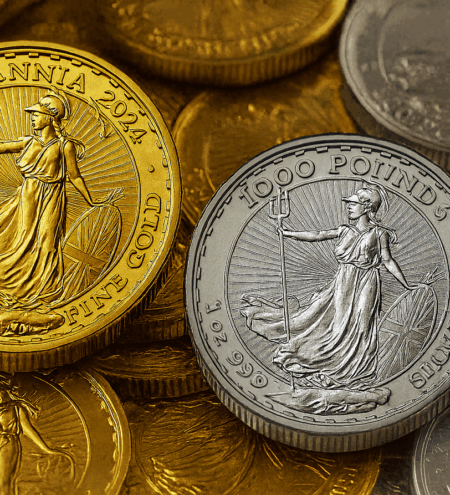
A growing divide between physical demand and financial pricing
The precious metals market is showing a widening gap between physical ownership and paper market pricing. While gold and silver prices have experienced sharp declines in recent trading, the movement of physical metal tells a different story.
Gold recently traded around $4,119 per ounce, down approximately 2.04 percent, while silver fell more aggressively to around $68.80 per ounce, declining more than 6 percent. Yet beneath the price action, physical bullion continues to move from Western markets into Eastern vaults, particularly China.
This raises an important question for investors: are paper prices reflecting the true supply and demand fundamentals of physical metal?
China’s increasing appetite for physical bullion
China has continued to build its position as one of the world’s largest accumulators of physical gold and silver. Rather than focusing solely on financial instruments linked to precious metals, Chinese investors, institutions, and the central bank have increasingly favoured direct ownership of physical bullion.
Recent data shows significant movements within Asian precious metals exchanges. Shanghai Futures Exchange silver inventories have declined by more than 22,000 kilograms, while Shanghai Gold Exchange silver vault holdings have also fallen by almost 5,000 kilograms during the week.
At the same time, Western markets continue to see heavy trading activity in paper contracts, where large volumes of gold and silver are bought and sold without necessarily involving the transfer of physical metal.
The result is a growing separation between the paper price and the physical market.
The West sells paper while the East accumulates metal
For decades, London and New York have been the dominant centres for precious metals pricing. However, the balance of power is gradually shifting as countries such as China, India, and other emerging economies increase their physical holdings.
The Western financial system largely prices gold and silver through futures markets, derivatives, and exchange traded products. These markets can create significant short term price movements as investors react to interest rates, currencies, and market sentiment.
Physical buyers, however, are focused on long term preservation of wealth.
The East appears to be taking advantage of periods of price weakness by increasing physical accumulation, while many Western investors remain focused on short term price movements.
Market volatility returns as stocks suffer a major selloff
The precious metals decline has occurred alongside major pressure in global equity markets. A sharp technology sector selloff has wiped approximately $1 trillion from the US stock market, raising concerns about market valuations and financial stability.
As equity markets weaken, investors are once again questioning the sustainability of high debt levels, government deficits, and monetary policy.
The Federal Reserve and other central banks have repeatedly faced the challenge of supporting financial markets while managing inflation risks. Expectations of renewed liquidity measures have increased as financial conditions tighten.
The debt problem driving the long term gold story
The United States is carrying nearly $40 trillion in national debt, with interest payments continuing to rise as borrowing costs increase.
The central issue facing governments is that debt growth has become a structural problem. Large deficits continue, while political solutions remain limited.
This environment has historically been supportive for gold because the precious metal has no counterparty risk. Unlike currencies backed by government promises, physical gold represents a finite asset that cannot be created through monetary expansion.
Analysts such as David Rosenberg believe the recent gold decline does not signal the end of the bull market. Instead, he argues it may represent another opportunity within a broader cycle driven by central bank diversification away from the US dollar and increased gold ownership.
Is the gold bull market ending or beginning a new phase?
The recent selloff has created uncertainty among investors, but history shows that major gold bull markets rarely move in a straight line.
Corrections are normal, especially after strong price increases. The bigger question is whether the fundamental drivers behind gold demand have changed.
Central bank buying, currency concerns, rising government debt, geopolitical uncertainty, and increasing demand for physical bullion remain powerful long term factors.
The movement of physical gold and silver from Western markets into Eastern ownership suggests that many investors are positioning for a different monetary environment.
The price may fluctuate daily, but the underlying question remains:
Are markets correctly valuing physical precious metals, or are paper markets temporarily masking a much larger shift in global wealth ownership?
For investors watching the next decade, the battle between paper pricing and physical demand may become one of the defining themes of the precious metals market.