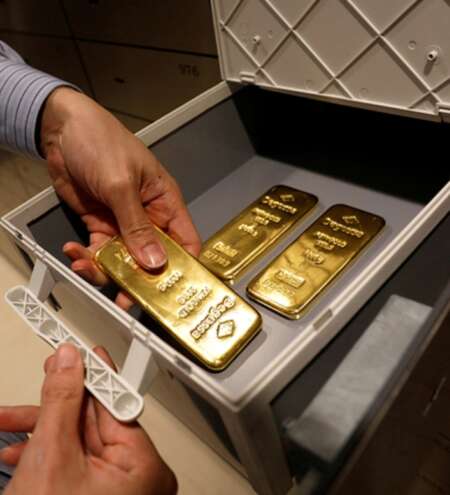
Gold may have stumbled during the second quarter of 2026, but the bigger picture remains firmly intact. According to global investment manager Invesco, the recent correction is more likely a pause in a long-term bull market than the beginning of a prolonged decline.
After surging to record highs earlier this year, gold experienced its sharpest quarterly fall in more than a decade. Rising oil prices, renewed inflation fears, a stronger US dollar and growing expectations that the US Federal Reserve could lift interest rates all combined to pressure the precious metal.
Yet despite these short-term challenges, Invesco believes one powerful force continues to underpin the market: relentless buying by central banks.
Gold Gives Back Earlier Gains
Gold prices fell more than 14% during the second quarter, wiping out the gains made at the start of the year. At one point in late June, the metal briefly slipped below the psychologically important US$4,000 an ounce level before recovering to finish the quarter just above that mark.
Although the decline caught many investors by surprise, Invesco notes that corrections of this size are not unusual after strong rallies. Even after the pullback, gold remains significantly higher than it was a year ago, highlighting that the longer-term trend is still positive.
Markets rarely move in straight lines, and healthy corrections often allow excessive speculation to unwind before the next advance.
Inflation Fears Changed the Market
The biggest catalyst behind gold’s decline was a sudden shift in inflation expectations.
Conflict in the Middle East temporarily pushed energy prices higher, raising concerns that inflation could remain stubbornly above central bank targets. Investors quickly reassessed their expectations for interest rates, moving from anticipating cuts to considering the possibility of further increases.
Higher interest rates generally weigh on gold because the metal does not pay interest or dividends. When bond yields rise, some investors prefer income-producing assets over bullion.
At the same time, the US dollar strengthened as traders anticipated tighter monetary policy, making gold more expensive for buyers using other currencies.
Federal Reserve Policy Remains the Key Risk
Much of the market’s attention is now focused on the US Federal Reserve.
If inflation remains elevated, policymakers could keep interest rates higher for longer or even introduce additional rate increases. That scenario would likely create further volatility in gold prices over the coming months.
Conversely, if inflation begins to ease and economic growth slows, expectations could quickly shift back towards lower interest rates, creating a more supportive environment for precious metals.
As always, gold remains highly sensitive to changes in monetary policy.
Central Banks Continue to Accumulate Gold
Despite weaker investment demand during the correction, one group of buyers has shown no sign of slowing down.
Central banks around the world continue to add gold to their reserves at historically high levels.
This buying reflects a growing desire to diversify away from the US dollar while strengthening national reserves with a tangible asset that carries no counterparty risk.
According to recent surveys by the World Gold Council, nearly half of central banks expect to increase their gold holdings over the next year, while an overwhelming majority believe global official gold reserves will continue to grow.
Unlike private investors, central banks are generally not concerned with short-term price fluctuations. Their purchasing decisions are driven by long-term financial security, reserve diversification and protection against geopolitical uncertainty.
That steady demand creates an important foundation beneath the gold market.
Why Gold Still Has Long-Term Strength
Several of the factors that drove gold to record highs over the past few years remain firmly in place.
Governments continue to accumulate record levels of debt.
Global geopolitical tensions remain elevated.
Many economies continue to battle persistent inflation.
Central banks around the world are actively diversifying their reserves.
These structural drivers have not disappeared simply because gold experienced one difficult quarter.
Investors Should Focus on the Bigger Picture
Short-term price swings are part of every bull market.
History has shown that periods of weakness often provide opportunities for long-term investors rather than signalling the end of a rally.
Gold continues to serve an important role in diversified investment portfolios. Unlike paper assets, physical gold carries no default risk, no issuer risk and has preserved wealth through wars, financial crises and inflationary periods for thousands of years.
While interest rate expectations may continue to create volatility in the months ahead, Invesco believes the underlying fundamentals remain supportive for higher prices through the remainder of 2026.
For investors looking beyond daily headlines, the recent correction may prove to be nothing more than a temporary setback in a much larger long-term story.
Disclaimer: This article is for general information only and should not be considered financial advice. Precious metal prices can be volatile, and past performance is not indicative of future results. Investors should conduct their own research and seek independent financial advice before making investment decisions.