Gold has staged a powerful recovery, climbing to a nine-week high after softer US inflation data reduced expectations of an imminent Federal Reserve interest-rate hike and renewed investor interest in bullion.
Spot gold jumped as much as 1.6% to above US$4,439 an ounce, while US gold futures pushed towards the US$4,500 level in New York.
The latest US Consumer Price Index (CPI) report showed consumer prices increasing 0.1% month-on-month and 3.4% year-on-year in July, broadly matching market expectations.
While inflation remains elevated, the latest figures provided some relief to markets concerned that persistent price pressures could force the Federal Reserve to maintain or increase interest rates for longer.
For gold, that shift in expectations is important.
Fed Rate-Hike Expectations Begin to Fall
Gold has been particularly sensitive to interest-rate expectations throughout 2026.
Higher interest rates can make non-yielding assets such as gold less attractive compared with interest-bearing investments. Conversely, when expectations for higher rates decline, the opportunity cost of holding gold falls.
Following the latest inflation data, markets have reduced the probability of a September Federal Reserve rate hike.
That follows weaker-than-expected US employment data, which has already encouraged traders to reassess the outlook for monetary policy.
However, the Fed remains divided on the balance between inflation and employment.
Chicago Federal Reserve President Austan Goolsbee has indicated that elevated inflation remains a greater concern than weakness in the labour market, highlighting the uncertainty surrounding the Fed’s next move.
For gold investors, this means the next few inflation and employment reports could be critical.
Gold’s Recovery Has Gathered Momentum
The latest rally comes after one of gold’s strongest weekly performances of the year.
The precious metal has endured considerable volatility in 2026, falling sharply from an early-year high above US$5,300 an ounce before staging a significant recovery.
Gold’s recent move back above US$4,000 has been supported by renewed investor demand, central-bank purchases and growing uncertainty surrounding the global economic and geopolitical outlook.
The latest rally has now pushed gold firmly into positive territory for the year.
This is significant because gold had spent much of the year recovering from its earlier correction.
Is This the Start of Another Major Gold Rally?
The big question for investors is whether the current rebound is simply a tactical recovery or the beginning of another sustained move higher.
There are arguments on both sides.
The bullish case is supported by continued central-bank buying, growing concerns over government debt, uncertainty surrounding fiat currencies and expectations that monetary policy could eventually become more accommodative.
Central banks remain particularly important to the long-term gold story.
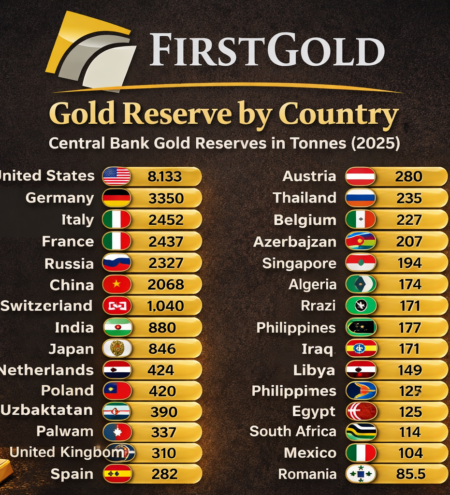
China continues to attract attention, with the People’s Bank of China adding gold to its reserves for another consecutive month. Continued central-bank accumulation provides a structural source of demand that is less dependent on short-term price movements.
As one market observer noted, central banks have continued buying even through periods of significant gold-price volatility.
That persistent demand is very different from short-term speculative trading.
Central Banks Continue to Build Gold Reserves
The People’s Bank of China has become one of the most closely watched central-bank buyers.
Its continued accumulation highlights a broader trend among central banks seeking to increase their exposure to gold as part of their reserve portfolios.
For investors, this is an important distinction.
Some gold buying is tactical, driven by short-term expectations surrounding interest rates, currencies and economic data. Central-bank purchases, however, tend to represent longer-term strategic decisions.
That combination of tactical investment flows and structural central-bank demand has helped provide a strong underlying foundation for the gold market.
Gold Is More Than a Safe Haven
Gold’s appeal is also evolving.
While the metal has traditionally been viewed as a safe-haven asset during periods of financial or geopolitical stress, investors increasingly use gold as a wealth-preservation and portfolio-diversification asset.
The current environment combines several factors that can support this role: uncertainty over economic growth, elevated government debt, changing monetary policy expectations and continued geopolitical tensions.
Gold does not depend on the financial strength of a company or government to retain its intrinsic value.
This is one reason physical gold continues to attract investors even when financial markets are performing strongly.
Professional Investors Are Returning
The recent rebound has also attracted renewed interest from professional investors.
Gold-backed exchange-traded funds have recorded stronger flows, while activity in major gold ETFs has increased as investors reassess the outlook for interest rates.
However, the nature of this buying may be different between regions.
Some US flows appear more tactical, responding quickly to changes in Federal Reserve expectations and economic data.
Asian and European demand has generally been viewed as more strategic and longer-term, adding another layer of support to the market.
This distinction is important because tactical investors can sell quickly when market expectations change, whereas physical and strategic buyers are often less sensitive to short-term price movements.
US$4,200 Becomes the Key Support Level
Despite the bullish momentum, investors should not assume that gold will move higher in a straight line.
Saxo Bank’s head of commodity strategy Ole Hansen has highlighted the US$4,200 an ounce area as an important support level.
Gold has successfully moved away from this region during its latest recovery, but a sustained break back below US$4,200 would weaken the current bullish structure.
On the upside, the market is now watching the US$4,400–US$4,500 zone.
A sustained move through US$4,500 could provide another important technical signal and potentially reopen the path towards the previous highs.
What Could Send Gold Higher?
Several factors could provide further support for gold in the months ahead.
Lower interest-rate expectations could increase demand for bullion as investors look for alternatives to cash and bonds.
A weaker US dollar would generally make gold more affordable for buyers using other currencies.
Central-bank accumulation could continue to provide structural demand.
Geopolitical uncertainty can encourage investors to increase exposure to physical assets.
And concerns over government debt and fiscal spending could strengthen gold’s role as a store of value.
However, there are risks.
A resurgence in US inflation could force the Federal Reserve to maintain a tighter monetary policy stance. Stronger economic data could also push bond yields and the US dollar higher, creating renewed pressure on gold.
The Bigger Picture for Gold Investors
Gold’s journey through 2026 has demonstrated just how volatile the precious-metal market can be.
After reaching above US$5,300 earlier in the year and subsequently falling by almost 18%, gold has now recovered strongly and returned to positive territory for the year.
The latest CPI data has provided another catalyst, but the longer-term gold story extends well beyond a single inflation report.
The combination of central-bank demand, monetary uncertainty, geopolitical risk, government debt and changing investor attitudes towards traditional currencies continues to underpin the broader case for gold.
The immediate question is whether gold can convert its latest momentum into a sustained break above US$4,500.
If it can, attention could quickly turn back towards the higher levels seen earlier in the year.
If it cannot, the US$4,200 support zone remains the level bulls will want to defend.
FirstGold Market View
For investors considering physical gold, the latest rally is another reminder that timing the market perfectly is extremely difficult.
Gold can move thousands of dollars over relatively short periods, making disciplined accumulation an important strategy for investors who are building a long-term physical bullion position.
Rather than attempting to predict every short-term movement, many investors choose to accumulate gold progressively, allowing purchases to be spread across different market conditions.
At FirstGold, we believe the long-term value of physical gold extends beyond today’s price. Gold remains a tangible asset with a history spanning thousands of years, and its role in wealth preservation continues to attract both private investors and central banks.
Gold has recovered from one of its sharpest corrections of 2026. With inflation easing, rate-hike expectations changing and central banks continuing to accumulate bullion, the next major test could be US$4,500 — and the market will be watching closely.
Disclaimer: This article is for general information purposes only and does not constitute financial or investment advice. Precious-metal prices can rise and fall rapidly. Investors should consider their own circumstances and seek independent professional advice before making investment decisions.