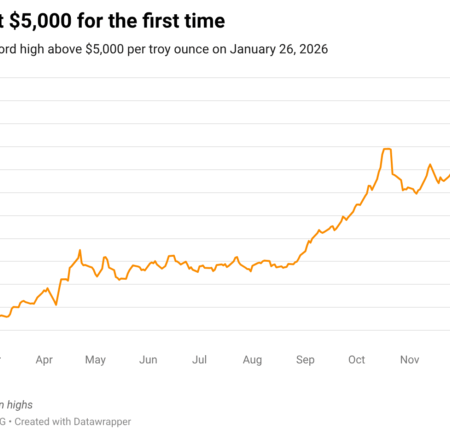
Gold has taken a breather after its powerful rally, but the bigger story remains firmly focused on the forces driving investors towards the precious metal.
Spot gold is currently around AUD $6,403.48 per ounce, while silver is trading around AUD $96.26 and platinum around AUD $2,559.70. After gold recently pushed towards US$4,700, the market has entered a period of consolidation, with investors watching closely to see whether this is simply a healthy correction before another move higher.
The key question is simple:
Is this a buying opportunity or the beginning of a deeper correction?
Gold Tests Important Support
Gold recently fell to around US$4,565, creating an important short-term support level. Technical analysts are also watching the US$4,527 area, close to the 200-day moving average.
The 200-day moving average is particularly important because gold has historically used this long-term indicator as a major trend guide. Gold’s recent move back above the 200-day average has strengthened the argument that the longer-term bullish trend remains intact.
A deeper correction towards US$4,527 would not necessarily destroy the bullish outlook. In fact, for long-term investors, a pullback can provide the market with an opportunity to consolidate before potentially moving higher.
Another important level sits around US$4,450, which could become support if the 200-day moving average fails.
US$4,770–US$4,774 Is the Next Major Test
If gold can regain momentum, attention will turn towards the US$4,770–US$4,774 area.
This region represents a significant technical resistance zone, with several technical indicators pointing towards the same area.
A decisive break above it could open the door to another substantial move higher.
But investors should remember that technical targets are not guarantees. Gold can move quickly in both directions, particularly when currencies, interest rates, geopolitics and central-bank buying are all influencing the market.
UBS Sees Gold Going Even Higher
The bullish case is not coming exclusively from technical analysts.
UBS has highlighted the growing importance of de-dollarisation and believes the structural forces supporting gold remain powerful.
The bank expects gold to reach approximately US$5,400 per ounce over the next 12 months.
UBS points to several factors behind its outlook, including concerns surrounding the US fiscal position, diversification away from the US dollar, continued central-bank purchases and renewed investment demand for gold.
The People’s Bank of China also increased its gold reserves by 20 tonnes in July, according to the UBS commentary, representing its largest monthly increase since October 2023.
For FirstGold investors, this is an important development.
Central banks are not trading gold because of the latest technical chart pattern. They are accumulating physical reserves as part of longer-term reserve diversification.
The Bigger Story Is De-Dollarisation
Gold’s current strength cannot be viewed in isolation.
The world is gradually changing the way it thinks about reserve assets.
For decades, the US dollar has occupied a dominant position within the global financial system. But concerns over government debt, fiscal deficits, inflation and geopolitical risk are encouraging countries to diversify their reserves.
Gold has no issuing government, carries no counterparty risk when held physically and cannot simply be created through monetary policy.
That makes physical gold particularly attractive during periods when confidence in currencies and government finances is under pressure.
This is one reason central-bank gold buying has become such an important part of the global gold story.
What Does This Mean for Physical Gold?
There is an important distinction between the spot price of gold and the price investors actually pay for physical bullion.
Spot gold is a financial market reference price. Physical bars and coins incorporate manufacturing, refining, distribution, insurance, storage and dealer costs.
For an investor accumulating physical bullion, therefore, the objective should not necessarily be to perfectly predict whether gold will rise tomorrow or fall next week.
The bigger question is:
How much physical gold are you accumulating over time?
Trying to pick the exact bottom of every correction is extremely difficult.
Cost averaging can provide a more disciplined approach, allowing investors to continue accumulating physical bullion through both rising and falling markets rather than attempting to predict every short-term movement.
Gold’s Long-Term Case Remains Strong
Gold’s recent pullback is a reminder that even powerful bull markets do not move in a straight line.
Corrections are normal.
The important issue is whether the fundamental reasons for owning gold remain intact.
At present, the bullish argument continues to include:
- Growing concerns over US government debt and fiscal deficits
- Continued global de-dollarisation
- Central-bank gold accumulation
- Geopolitical uncertainty
- Inflation and currency purchasing-power concerns
- Renewed investment demand
- Expectations surrounding interest rates
- Increasing demand for physical gold
UBS’s US$5,400 target is certainly ambitious, but it demonstrates how dramatically the outlook for gold has changed.
Only a few years ago, prices at today’s levels would have seemed extraordinary.
Now the conversation has moved beyond whether gold can reach US$4,000 or US$5,000.
The question increasingly being asked is:
How high can gold ultimately go in a world of record government debt, monetary expansion and continued currency diversification?
For physical bullion investors, the short-term correction may be less important than the long-term monetary story.
Gold remains gold — and the world continues to accumulate it.
FirstGold Market Snapshot
Gold: AUD $6,403.48/oz
Silver: AUD $96.26/oz
Platinum: AUD $2,559.70/oz
Disclaimer: Prices supplied for this article are indicative spot prices and can move continuously. Physical bullion prices may differ from spot due to premiums, fabrication and market conditions.