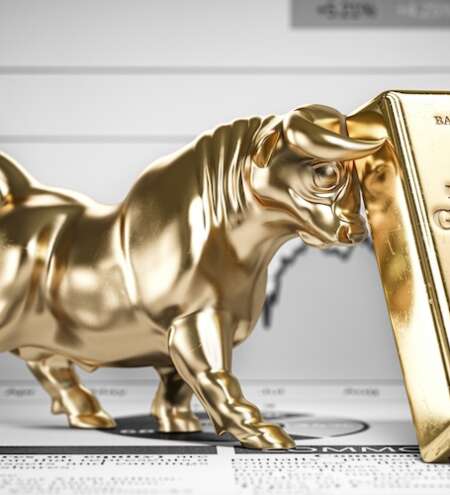
Gold has smashed past its inflation-adjusted peak from over 45 years ago, pushing its rally in U.S. dollar terms into truly uncharted territory. Driven by growing concern about America’s economic direction, bullion has extended one of its strongest bull runs in decades.
The spot price of gold recently hit a record US$3,670+ per ounce — that’s helped push the AUD price to about A$5,500/oz.
Back in January 1980, gold peaked nominally at US$850/oz. Adjusted for inflation using many standard metrics, that’s roughly US$3,590 in today’s dollars.
Thanks to the recent surge, gold has now pushed well beyond that historic line.
What’s Fueling the Surge
Inflation awareness & economic unease: Investors are increasingly worried about U.S. deficit spending, weakened dollar strength, and whether central banks are serious about fighting inflation.
Demand from central banks & institutions: Many are buying gold to diversify reserves and as insurance against geopolitical and financial instability.
US interest rate outlook & dollar weakness: Expectations of rate cuts, coupled with soft inflation / labour data, have reduced dollar strength and made gold more attractive.
Why the 1980 Peak Matters (Again)
When gold hit US$850/oz in 1980, the U.S. was battling runaway inflation, a weak dollar, recession fears, and global tensions (e.g. the Iranian hostage crisis). Its rise then was blistering and heavily volatile.
Today’s rally is different: it’s less chaotic in terms of daily swings, helped by deeper markets, broader investor participation, and more sophisticated inflation adjustments. It may not have the same flash, but many argue it has greater staying power.
What This Means for Australia
At about A$5,500 per ounce, gold is commanding historically high levels in local currency. For Australian investors and holders of bullion or jewellery, the value has surged not only because of gold’s USD strength but also due to AUD-USD dynamics.
Gold’s resurgence reinforces its role as a hedge — not just globally, but locally — against inflation, currency pressure, and economic uncertainty.