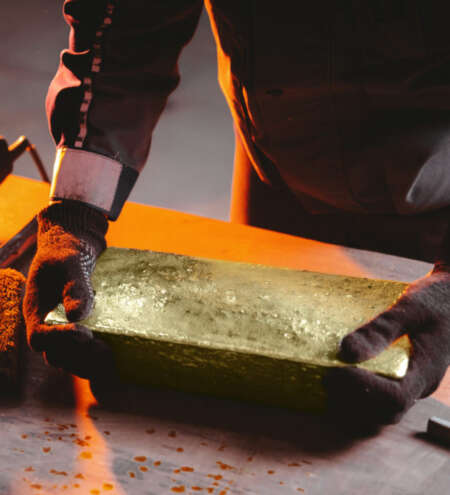
Gold’s remarkable rally shows few signs of fading, with analysts forecasting further upside in 2026 despite the metal recording its strongest performance since the 1979 oil crisis. Prices have doubled over the past two years, a surge that in previous cycles might have pointed to an imminent correction. This time, however, the structural drivers behind the rally appear far more entrenched.
Spot gold reached a record $4,381 per ounce in October, having never traded above $3,000 prior to March. The move has been fuelled by sustained central bank demand and a broadening investor base, with new buyers ranging from corporate treasuries to stablecoin issuers such as Tether.
Major institutions including JP Morgan, Bank of America and Metals Focus now see gold climbing towards $5,000 per ounce by 2026.
Why Analysts Remain Bullish
Bank of America strategist Michael Widmer says expectations of further price gains and the need for portfolio diversification continue to drive investment flows. Supportive macro forces include persistent US fiscal deficits, efforts to rebalance the US current account and policies that point towards a structurally weaker US dollar.
Meanwhile, Philip Newman, Managing Director at Metals Focus, highlights growing concerns around US Federal Reserve independence, ongoing tariff disputes and geopolitical risks—most notably the war in Ukraine and broader tensions between Russia and NATO—as additional pillars of support for bullion.
Central Banks Anchor the Gold Cycle
Central bank buying remains a critical foundation for the gold market. Analysts expect reserve diversification away from US dollar–denominated assets to continue for a fifth consecutive year, helping to stabilise prices during periods of investor profit-taking or market pullbacks.
“The price floor is now much higher than in previous cycles because central bank demand steps in when prices soften,” said Gregory Shearer, Head of Base and Precious Metals Strategy at JP Morgan.
JP Morgan estimates that maintaining current price levels requires quarterly central bank and investment demand of around 350 tonnes. Looking ahead, the bank forecasts average demand of 585 tonnes per quarter in 2026, well above the level needed to support prices.
Gold’s Growing Role in Portfolios
Investor exposure to gold continues to rise. Holdings now account for approximately 2.8% of total assets under management, up from 1.5% before 2022. While elevated, analysts say this does not necessarily represent a peak allocation.
Forecasts across the market remain constructive:
Morgan Stanley sees gold reaching $4,500 per ounce by mid-2026
JP Morgan projects average prices above $4,600 in Q2 2026 and over $5,000 by Q4
Metals Focus expects gold to trade near $5,000 by the end of 2026
Hedging Equity Risk
The Bank for International Settlements (BIS) recently noted that the simultaneous surge in both gold and equity prices is a rare phenomenon not seen in over half a century, raising questions about potential asset bubbles.
Analysts suggest that a significant portion of gold buying in 2025 has been driven by its role as a hedge against sharp equity market corrections, particularly amid geopolitical tensions, trade disputes and ongoing conflict in Eastern Europe.
That said, gold is not immune to risk. Sharp equity sell-offs can sometimes force investors to liquidate even safe-haven assets to cover losses elsewhere.
A Structural Shift, Not a Short-Term Trade
Nicky Shiels, Head of Metals Strategy at MKS PAMP, expects gold to average $4,500 in 2026, describing the metal as “a multi-year, secular portfolio asset rather than a cyclical hedge.”
Some analysts are more cautious. Macquarie expects global growth to stabilise, central bank easing to taper and real interest rates to remain relatively high. As a result, it forecasts average gold prices of $4,225 in 2026, slightly below current spot levels.
Demand and Supply Outlook
Central bank purchases and inflows into gold ETFs are expected to moderate next year, while jewellery demand—down 23% in the third quarter—remains under pressure. However, retail demand for bars and coins has helped offset this weakness, with evidence suggesting a shift from jewellery to investment-grade gold in regions such as Australia and Europe.
Notably, limited profit-taking was seen even after gold’s October highs. “If prices begin to accelerate again, buying into the rally could well continue,” said Newman of Metals Focus.
On the supply side, the response has been muted, with recycling up just 6% and no meaningful central bank selling. Total global gold demand is on track to rise 11% in 2025 to 5,150 tonnes, before easing to 4,815 tonnes in 2026, according to Macquarie.
FirstGold Outlook:
Despite its historic gains, gold’s rally appears to be underpinned by long-term structural forces rather than speculative excess. While the pace of gains may slow, analysts broadly agree that gold is set to remain a cornerstone asset in global portfolios well into 2026 and beyond.