Gold does not pay dividends or generate coupons. Its investment case rests entirely on capital appreciation and its role as a store of value during periods of monetary uncertainty or geopolitical stress. This makes the precious metal especially sensitive to changes in real interest rates and Federal Reserve policy signals.
When rates rise, the opportunity cost of holding non-yielding gold increases. Capital tends to shift toward yield-generating assets such as US Treasuries and high-grade bonds. This dynamic has repeatedly caused drawdowns in gold prices during past tightening cycles, particularly when real yields climb significantly.
Real Yields Matter More Than Nominal Rates
The key variable is real yields, not just nominal rates. Higher real yields make gold less attractive relative to other assets. This relationship is central to any realistic gold price forecast for 2026 amid shifting Fed expectations.
Robert Kiyosaki Remains Bullish Despite Sharp Pullback
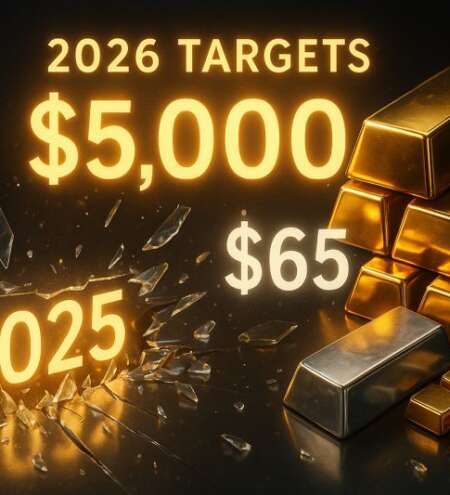
Gold and silver have come under heavy pressure recently. Gold has fallen from around $4,540 to $4,155 per ounce an 8.5% drop over the past month. Silver has declined from about $78 to $64.83, hitting its lowest level since June 11.
While many investors are concerned, Rich Dad Poor Dad author Robert Kiyosaki is not panicking. In a recent post, he explained why falling prices have not changed his long-term bullish view and why he is waiting for the right moment to buy.
Kiyosaki acknowledged past mistakes of letting price alone dictate buying or selling decisions. Instead, he focuses on the broader environment. He assesses whether political and banking leaders are solving economic problems or making them worse. His assessment is clear: global leaders are “incompetent” and are exacerbating issues.
Despite his strong fundamental conviction that the dollar is debasing and hard assets will ultimately prevail, Kiyosaki is not buying the dip immediately. He is closely watching technical charts for gold, silver, Bitcoin, and Ethereum. He plans to enter when prices show signs of reversing the current downtrend.
He believes the charts indicate gold and silver are “poised for a massive rise in prices” once the correction ends.
What Is Driving the Recent Decline
As of June 19-20, 2026, gold is trading near $4,155 per ounce while silver sits around $64.83-$65.56. The pullback is primarily driven by:
- A stronger US dollar
- Rising expectations of higher-for-longer interest rates following the Federal Reserve’s hawkish shift under new Chair Kevin Warsh
- Reduced safe-haven demand after recent geopolitical tensions eased
Silver has shown greater volatility than gold, reflecting its dual role as both a monetary and industrial metal.
Gold Price Forecast Implications
With the Fed signaling a more hawkish policy, real yields have climbed, increasing the opportunity cost of holding gold. This environment has prompted several banks, including Goldman Sachs, to lower their 2026 price targets. However, longer-term structural factors such as ongoing central bank buying and persistent monetary concerns continue to support a constructive outlook for bullion once the current headwinds subside.
Investors are now closely monitoring upcoming Fed communications and technical levels for clues on whether the correction is nearing an end.