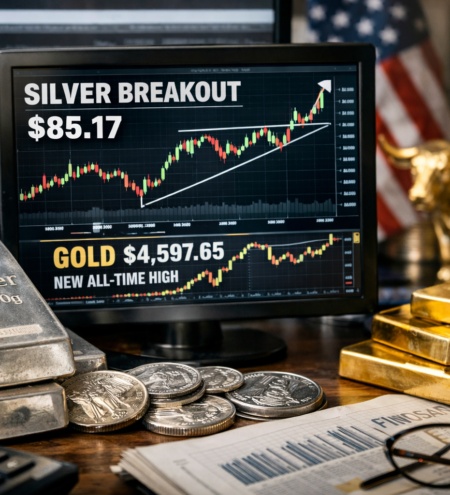
Gold is once again commanding global attention. As 2025 closes, financial markets remain shaken by slowing economic growth, softening labour data, and heightened geopolitical risks. With uncertainty growing, analysts expect gold could soar up to 30% in 2026.
Investors are shifting away from volatile assets and back into safe-haven holdings. With interest rates easing and inflation fears lingering, gold is benefiting from renewed demand from both institutional and private buyers.
Why Analysts Believe Gold Has More Upside Ahead
The World Gold Council (WGC) forecasts a 15%–30% rise in 2026, depending on the level of safe-haven buying and capital flows into gold-backed exchange-traded funds (ETFs).
Gold has already delivered an exceptional performance in 2025 — more than 50 record highs and over 60% year-to-date returns — demonstrating strong momentum heading into the new year.
Three key drivers are strengthening the outlook:
Central Banks Are Buying More Gold
Official gold reserves are rising as central banks diversify away from the US dollar and protect themselves from sanctions and currency risk.
This buying removes gold from circulation and creates a structural floor under prices.
Countries across Asia and the Middle East remain the most active buyers — and they typically hold long-term, further tightening supply.
Private Investors and ETFs Are Piling Back In
After years of lighter participation, gold ETFs saw significant inflows in 2025 — and retail demand for bullion bars, coins, and sovereign products has strengthened globally.
More buyers entering the gold market = more upward pressure on prices.
Geopolitical Tensions Are Fueling Safe-Haven Demand
From international trade disputes to armed conflicts, 2025 has been characterised by elevated political risk.
History shows that even regional flashpoints can trigger rapid flight-to-safety buying.
As uncertainty rises → gold demand rises.
How Gold Stacks Up Against Other Assets
As some equity markets look overstretched and crypto remains highly volatile, investors are rebalancing portfolios. Falling real yields and a weaker US dollar make gold a more attractive store of value than debt-based assets.
Gold doesn’t rely on earnings or policy promises — it simply protects wealth.
What Could Hold Gold Back?
Analysts highlight several risks:
Risk Factor Possible Impact
Strong US dollar Dampens gold demand
Fewer-than-expected rate cuts Slower upside
Profit-taking after big gains Short-term pullbacks
Softer geopolitical environment Reduced safe-haven flows
Even within a bull cycle, 5–10% corrections are considered normal.
Where Could Prices Go Next?
Major institutions expect further strength, with many forecasting gold in the mid-$4,000s per ounce within 12 months.
Some banks — including Goldman Sachs — see $4,900/oz or higher in a bull-case scenario by late 2026.
How Investors Can Prepare
Investors looking to position safely are:
Adding gold gradually with staggered purchases
Holding a mix of physical bullion and investment products
Watching inflation, yields, and central bank activity closely
Gold remains one of the few assets that protects in uncertainty and performs in crisis.
Conclusion: A Strong Case for Gold — With Room to Grow
The combination of:
✔ central bank accumulation
✔ rising retail & ETF investment
✔ geopolitical instability
✔ easing interest rates
…creates an environment where gold’s momentum looks firmly supported.
With upside forecasts of 15% to 30% in 2026, many investors see now as a strategic moment to secure their position in gold — while prices remain below future expectations.
Disclaimer: The information above is general in nature and does not constitute financial advice. Investors should seek independent professional guidance before making investment decisions.