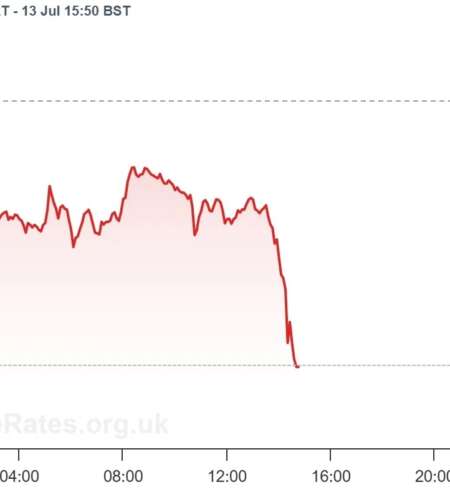
The Silver Market’s Emotional Cycle Continues
Silver has always been a market driven by both fundamentals and human emotion. When prices rise, investors rush in believing the trend will continue forever. When prices fall, confidence disappears and the same asset that was once considered a must own suddenly becomes unwanted.
The psychology is familiar:
Silver at $120: everyone wanted it.
Silver at $58: everyone hates it.
The metal has not changed. The fundamentals have not disappeared overnight. The only thing that changed was sentiment.
This is the classic cycle that repeats across financial markets. The crowd becomes most enthusiastic near the highs and most fearful near the lows.
For disciplined investors and speculators, these moments of pessimism often create the greatest opportunities.
Why Is Silver Pulling Back?
Silver and silver mining stocks have recently come under pressure following a more hawkish tone from the Federal Reserve. Markets have adjusted expectations around interest rates, the US dollar, and the timing of future monetary policy changes.
Higher interest rates and a stronger dollar traditionally create headwinds for precious metals because they increase the opportunity cost of holding assets that do not pay interest.
However, the bigger question is whether the Federal Reserve actually has the flexibility the market believes it has.
Global debt levels continue to expand. Governments continue to run large deficits. Interest payments are becoming a larger burden. A return to significantly higher rates for a prolonged period may place increasing pressure on financial systems.
This creates a potential disconnect:
The market is pricing in a stronger ability to maintain tight monetary conditions.
The underlying financial environment may suggest limits to how far that tightening can continue.
Silver’s Unique Position
Unlike gold, silver is not only a monetary metal. It is also a critical industrial commodity.
Demand continues to be supported by:
• Solar energy expansion
• Electrification
• Data centres and technology infrastructure
• Electronics manufacturing
• Battery and energy technologies
At the same time, silver supply has struggled to respond quickly because much of the world’s silver production comes as a by-product of mining other metals.
This creates an interesting setup where industrial demand continues growing while available supply remains constrained.
Fiat Money and the Search for Real Assets
Throughout history, periods of monetary expansion have pushed investors towards assets that cannot be created with a printing press.
Currencies can be expanded.
Debt can increase.
Paper claims can multiply.
But physical silver and gold remain finite resources.
The purchasing power of fiat currencies has declined significantly over the past century as monetary systems have evolved. This has driven many investors to view precious metals as a form of financial insurance against currency debasement and economic uncertainty.
The world continues to face major challenges:
• Rising government debt
• Geopolitical tensions
• Banking risks
• Currency competition
• Inflation concerns
These factors continue to influence demand for hard assets.
The Speculator’s Opportunity
Markets often provide the greatest opportunities when emotions are at extremes.
When silver was rising aggressively, investors chased momentum.
When silver pulls back, many investors lose interest.
This is where contrarian thinking becomes important.
A declining price does not always mean a broken market. Sometimes it represents a reset, where weak hands sell and stronger hands accumulate.
The key question is not:
“Why is silver falling today?”
The bigger question is:
“Has the long-term monetary and industrial story changed?”
Can Silver Reach Extreme Targets?
Some silver commentators have suggested extremely bullish scenarios, including prices far above current levels. Forecasts such as $600 silver represent a major revaluation scenario based on currency weakness, supply shortages, and a potential shift in how markets value scarce physical assets.
Such outcomes are not guaranteed and depend on many factors, including monetary policy, economic growth, investment demand, and industrial consumption.
However, history shows that markets can move far beyond what the majority expects when confidence in existing systems changes.
The Lesson of Silver
Silver teaches the same lesson repeatedly:
The crowd usually wants an asset after it has already moved higher.
The crowd usually rejects it after it has fallen.
Successful investors often focus less on emotion and more on fundamentals, valuation, and long-term trends.
Silver at $120 created excitement.
Silver at $58 creates doubt.
But the underlying question remains:
Has the world become less uncertain, less indebted, and less dependent on real assets?
For many investors, the answer is no.
And that is why silver remains one of the most watched assets in the global financial system.
Disclaimer: This article is for educational purposes only and does not constitute financial advice. Precious metals can be volatile, and investors should conduct their own research and consider their individual circumstances before making investment decisions.