Gold prices are pausing for breath on Thursday, 18 December 2025, following a strong late-session advance on Wednesday. Spot gold is holding in the mid-$4,300s per ounce in early European trade, as investors weigh dovish Federal Reserve signals against a firmer US dollar and the risk of fresh inflation surprises.
The consolidation comes at a critical juncture for the market. A delayed US Consumer Price Index (CPI) report for November is due later today, followed by the Personal Consumption Expenditures (PCE) inflation gauge on Friday — data that could reshape expectations for 2026 interest-rate cuts and set the near-term tone for XAU/USD.
Gold Prices Today: Spot and Futures
In early-session trade:
Spot gold slipped 0.2% to around $4,333 per ounce
US COMEX gold futures eased 0.2% to roughly $4,364
Price action remains contained within a relatively tight intraday range, with XAU/USD trading between approximately $4,321 and $4,343, signalling consolidation rather than a break in trend.
Stepping back, gold remains historically elevated. The metal has enjoyed an exceptional 2025, reaching an all-time high near $4,381 per ounce in October — a level that continues to stand as the next key test for bullish momentum.
Why Gold Is Holding Firm
Gold’s underlying support remains the same force that dominated much of 2025: expectations for lower interest rates.
Recent commentary from Federal Reserve officials has reinforced the view that there is still scope for rate cuts as the US labour market shows signs of cooling. For gold, a non-yielding asset, falling cash and bond returns enhance its relative appeal.
Offsetting that support, however, is a firmer US dollar. The greenback has held near recent highs, capping near-term upside in dollar-priced bullion by making gold more expensive for non-US buyers. This tug-of-war between rate-cut optimism and currency strength explains the market’s current wait-and-see posture.
All Eyes on US CPI
The immediate catalyst is today’s US CPI release for November, followed by Friday’s PCE inflation data.
This CPI print is unusual and closely watched for two reasons. First, it represents the first meaningful inflation update after data disruptions caused by a prolonged US government shutdown, which led to the cancellation of October’s CPI report. As a result, November’s release is expected to place greater emphasis on year-over-year measures rather than the usual full monthly breakdown.
Second, policy expectations are finely balanced. Economists broadly expect headline CPI to come in near 3.1% year-on-year, with core inflation around 3.0%, as markets debate the impact of tariffs and lingering cost pressures.
What CPI Could Mean for Gold
Softer-than-expected inflation could pressure bond yields and the US dollar, opening the door for gold to retest recent highs.
Stickier or hotter inflation may reinforce the dollar and yields, increasing the opportunity cost of holding gold and raising the risk of a deeper pullback after a powerful year-to-date rally.
Silver Leads the Precious Metals Complex
Gold is not moving in isolation. Silver has been the standout performer, helping to keep the broader precious-metals complex well supported.
Silver surged to a record $66.88 per ounce on Wednesday and remains near those highs, with gains of roughly 130% in 2025, far outpacing gold’s impressive rise of around 65%. Platinum and palladium have also strengthened, with platinum touching a more than 17-year high.
For gold, strong cross-metal flows matter. When capital rotates into precious metals as a group — driven by inflation hedging, industrial demand or hard-asset allocation — downside moves in gold often prove shallow, even when the dollar firms.
Geopolitics and Central Banks: Structural Support
Beyond daily fluctuations driven by rates and currencies, gold’s multi-year repricing reflects two deeper forces: geopolitics and central-bank demand.
Rising geopolitical tensions continue to underpin safe-haven demand, while central banks remain a crucial anchor. Analysts argue that sustained official-sector buying has effectively “rebased” gold at higher levels, reducing the likelihood of a classic post-rally collapse.
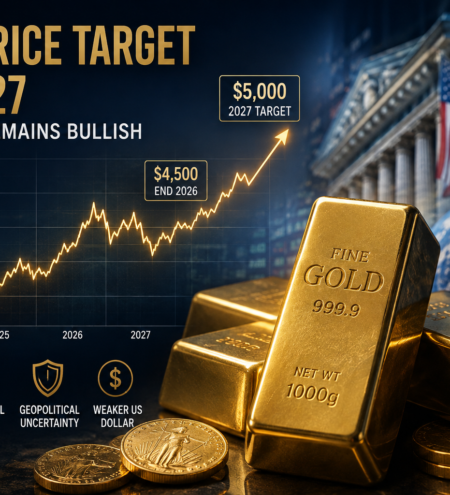
Major institutions, including JP Morgan and Bank of America, continue to see a credible path toward $5,000 per ounce in 2026, albeit with a slower and more measured pace of gains. JP Morgan estimates that roughly 350 tonnes per quarter of combined central-bank and investment demand is required to keep prices stable — a threshold it expects to be comfortably exceeded next year.
As markets await today’s CPI verdict, gold’s near-term direction may hinge on inflation data. But the broader narrative — one of structurally higher prices and strategic demand — remains firmly intact.