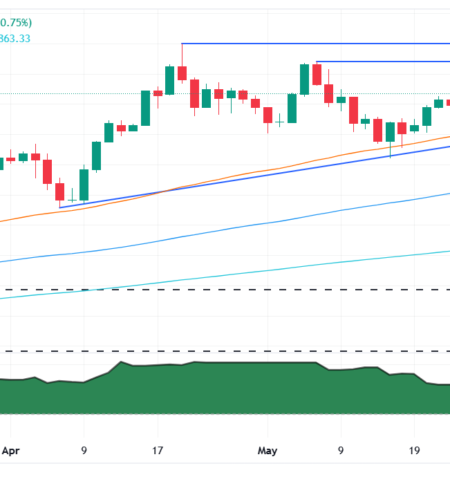
JP Morgan has made headlines with its latest gold price forecast, projecting that gold could average US$5,055 per ounce by the fourth quarter of 2026. This represents a significant premium over current market levels and signals a major shift in long-term institutional sentiment toward the precious metal.
According to the bank’s detailed outlook, this ambitious forecast is underpinned by sustained central bank accumulation, robust institutional demand, and an evolving monetary policy landscape that continues to favour hard assets. Together, these factors could reshape how global markets value gold in the years ahead.
Key Drivers Behind the $5,055 Forecast
JP Morgan’s model assumes that investor and central bank demand will average 566 tonnes per quarter in 2026—equating to around 2,264 tonnes annually. Such consistent demand reflects growing institutional confidence in gold’s role as a strategic portfolio diversifier amid economic and geopolitical uncertainty.
Unlike past crises, central banks are now buying gold not merely as an emergency hedge, but as part of long-term reserve rebalancing. Meanwhile, private investors are using gold to enhance portfolio resilience rather than as a short-term panic trade.
JP Morgan analysts note that their bullish outlook is built on multiple reinforcing trends—Federal Reserve policy easing, stagflation concerns, and global dollar diversification—which together form a powerful foundation for continued price strength.
Federal Reserve Policy: The Core Catalyst
Historically, rate-cutting cycles have been a major tailwind for gold. Lower interest rates reduce the opportunity cost of holding non-yielding assets, boosting gold’s relative appeal. JP Morgan expects the upcoming Fed easing cycle to coincide with economic slowdown fears, reinforcing gold’s position as a preferred inflation hedge.
In their commodities strategy report, analysts reaffirmed gold as their top long-term investment conviction, expecting sustained inflows as monetary conditions loosen and investors seek protection from currency and inflation risks.
2025 Performance: A Launchpad for 2026
Gold’s performance through 2025 has already set the stage for higher prices. The metal surged to a record US$4,381.21 per ounce in late October, with a 57% year-to-date gain, positioning it for its strongest annual performance since 1979.
Following a brief 5.4% correction to around US$4,146/oz, analysts interpret the move as healthy profit-taking rather than a sign of weakness—suggesting the market remains structurally bullish.
Central Banks Lead the Charge
Central banks have transformed from occasional buyers into systematic accumulators of gold. Their motivations now extend beyond inflation hedging to reserve diversification and monetary sovereignty protection.
| Year | Estimated Purchases | Primary Motivations | Market Impact |
|---|---|---|---|
| 2022 | 1,100+ tonnes | Dollar diversification | Price support |
| 2023 | 1,000+ tonnes | Inflation hedging | Sustained demand |
| 2024 | 800+ tonnes | Reserve rebalancing | Market stability |
(Estimates subject to World Gold Council verification.)
These figures reveal a structural shift—gold is increasingly seen as a core reserve asset, not a temporary hedge.
Dollar Diversification vs. Debasement
JP Morgan emphasises that the current gold rally is driven more by strategic dollar diversification than by fears of currency debasement. This suggests a measured reallocation of global reserves away from dollar dominance, signalling confidence in gold as a neutral, enduring store of value.
Outlook:
JP Morgan’s US$5,055 forecast underscores gold’s strengthening role within a redefined global financial order. As central banks, institutions, and investors converge on gold as a hedge against volatility, the path toward higher prices appears not only plausible—but increasingly probable.