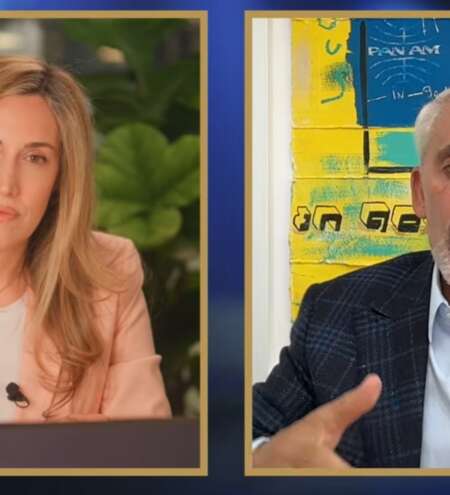
Eric Sprott began investing in precious metals in the 1980s, long before gold and silver became the focus of modern macro trading desks and ETF-driven speculation. Over four decades later, his conviction has not only endured but intensified. Today, his exposure to gold and silver is estimated at around 98 percent of his total wealth, making him one of the most concentrated precious metals investors in the world.
In recent years, that conviction has been handsomely rewarded. Sprott’s holdings in the sector have reportedly grown roughly four-fold in just two years, significantly boosting his net worth to over 3 billion dollars. But despite the dramatic gains, he remains firmly in accumulation mode rather than profit taking, maintaining a long term thesis that prices are still far from their true equilibrium.
A Lifetime Built Around Precious Metals
Sprott’s journey into metals began in the 1980s when inflationary pressures, volatile interest rates and repeated currency concerns shaped investor psychology. Unlike many institutional investors who view gold and silver as tactical hedges, Sprott treated them as structural necessities in a portfolio exposed to fiat currency risk.
Over time, he became one of the most vocal advocates for physical precious metals and mining equities. His investment philosophy is rooted in a simple but powerful belief: fiat currency systems are inherently vulnerable to debasement, while gold and silver preserve purchasing power across cycles of monetary expansion and contraction.
This conviction eventually led to the creation of investment vehicles focused on precious metals, helping bring institutional capital into a space that had historically been dominated by retail investors and specialist funds.
Riding Volatility, Not Fearing It
Sprott’s recent comments reflect a mindset that separates him from most market participants. Having recently visited mining operations in Australia and New Zealand, he was reportedly relaxed when speaking about the market’s extreme price movements.
At the time of his remarks, silver had surged to an all time high near 100 dollars per ounce, while gold had also reached record levels above 5,000 dollars before retracing. Shortly after, silver fell sharply to around 76 dollars and gold slipped below 5,000.
Rather than viewing this volatility as a warning sign, Sprott interprets it as evidence of a market struggling to find fair value amid global instability.
He noted that both gold and silver equities have significantly underperformed relative to the underlying metals, a divergence he believes will eventually correct. In his view, mining stocks remain undervalued despite record bullion prices, suggesting that the equity side of the sector has yet to fully price in the current macro environment.
The Long Term Thesis: Much Higher Prices Ahead
Sprott’s outlook remains among the most bullish in the industry. He has repeatedly suggested that silver could reach 200 dollars per ounce and potentially extend toward 300 dollars under extreme conditions. For gold, he has floated the possibility of a move toward 10,000 dollars per ounce over the long term.
These forecasts are not based on short term momentum, but rather on structural concerns around debt levels, currency debasement and geopolitical fragmentation. In Sprott’s framework, precious metals are not speculative assets but monetary insurance against systemic risk.
His argument is that as global debt expands and confidence in fiat systems fluctuates, investors will increasingly turn to hard assets that cannot be printed or devalued by central banks.
Why Sprott Remains Unmoved by Market Swings
One of the most striking aspects of Sprott’s approach is his emotional detachment from volatility. When silver surged to record highs and then corrected sharply within days, he remained calm and consistent in his outlook.
To him, price swings are not signals of a broken thesis but rather features of a highly leveraged and sentiment driven market. In his interpretation, sharp corrections often reflect liquidity stress and forced selling rather than fundamental deterioration.
This perspective is rooted in decades of observing precious metals cycles, where dramatic rallies are frequently followed by equally sharp retracements before establishing a higher long term range.
A Contrarian Position in a Macro Driven World
In an era dominated by algorithmic trading, macro hedging strategies and rapid capital rotation, Sprott’s approach stands out as deeply contrarian. Maintaining nearly all of his wealth in a single asset class would typically be viewed as extreme risk management by conventional portfolio theory.
However, his strategy is not based on diversification in the traditional sense but on conviction in a single macro thesis. That thesis assumes persistent monetary expansion, periodic financial instability and long term erosion of fiat purchasing power.
For investors watching from the sidelines, Sprott represents both an example of extraordinary conviction and a reminder of how asymmetric outcomes can emerge in commodity cycles.
Eric Sprott remains one of the most influential voices in the precious metals world. His decades long commitment to gold and silver has transformed him into a symbol of extreme conviction in hard assets, especially at a time when global markets are defined by uncertainty and volatility.
Whether his forecasts of 10,000 dollar gold and 300 dollar silver ultimately materialise remains to be seen. What is clear, however, is that his investment philosophy has already stood the test of time, turning early conviction into multi billion dollar success.
In a world where capital often chases short term narratives, Sprott continues to anchor himself in a simple belief that has guided him since the 1980s: when confidence in money falters, real assets endure.